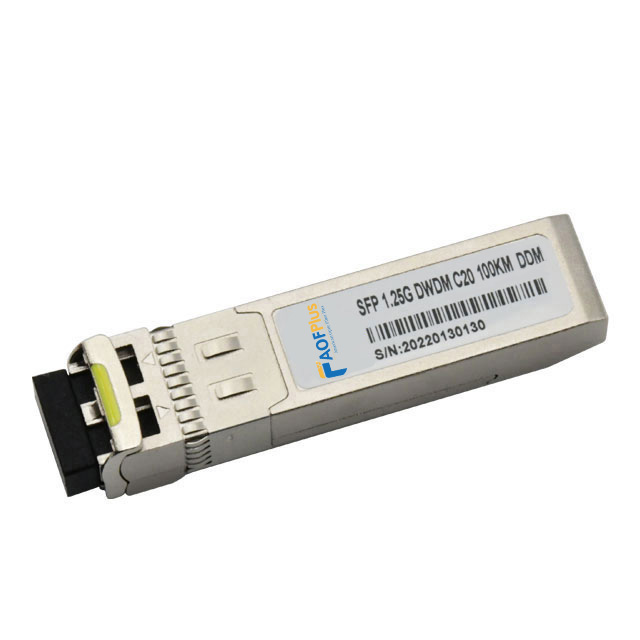
The accurate transmission of communication data is a crucial indicator for optical communication systems. Optical transceivers, as core components that perform photoelectric conversion in optical communication, can be affected by various factors during operation, leading to errors (such as excessively high or low temperatures, abnormal voltage, etc.). To monitor the real-time operating status of fiber transceivers, those supporting Digital Diagnostic Monitoring (DDM) functionality are particularly important. This article introduces the features of DDM in fiber optic transceivers.
What Is the DDM of Optical Transceivers?
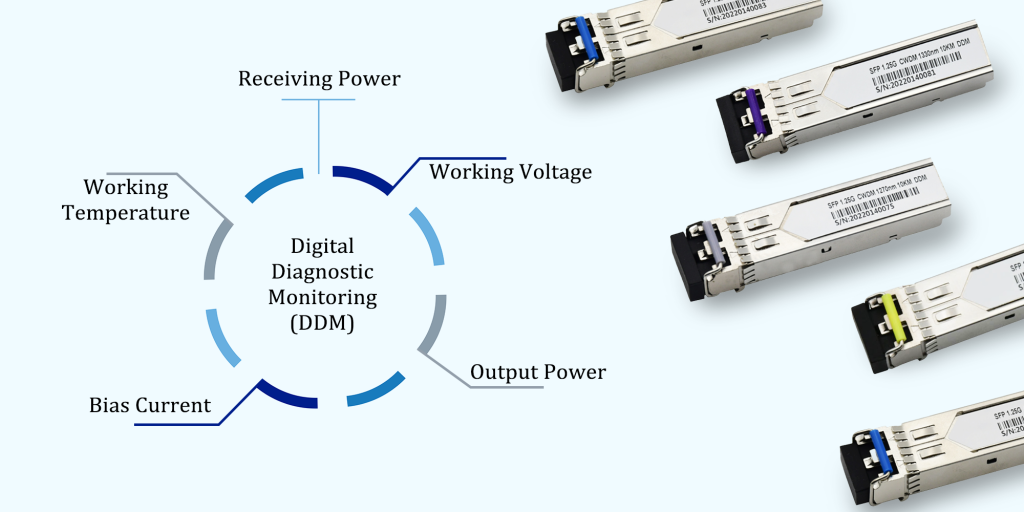
DDM (Digital Diagnostic Monitoring), developed by the industry organization SFF Committee, operates according to standard parameters defined by the SFF-8472 multi-source agreement. It standardizes the required values or ranges for the hardware and software of fiber transceivers and network equipment, ensuring interoperability between products from different network equipment and optical transceiver vendors. DDM is a real-time parameter monitoring technology for transceiver modules, including operating voltage, operating temperature, received optical power, transmitted optical power, and laser bias current.
The core of the fiber transceiver‘s DDM (Digital Diagnostic Monitoring) function is implemented through a microcontroller integrated into the transceiver. These microcontrollers can read data from various sensors within the transceiver module and transmit it through the transceiver’s electrical interface to the host or network management system for processing. In this way, network administrators can obtain various data from the fiber optic transceiver in a timely manner and monitor its status in real time.
What Are the Functions Of DDM of Optical Transceivers?
The most commonly used function of optical transceivers DDM (Digital Diagnostic Monitoring) is optical power monitoring. By monitoring the transmit and receive power of the optical transceiver, it is possible to promptly detect whether the fiber optic transmission performance is normal. If the transmit or receive power is below or above a certain threshold, it may indicate a fault or loss in the connection. In this case, the administrator can make corresponding adjustments or repairs based on this data.
Furthermore, the fiber transceiver’s DDM (Digital Diagnostic Monitoring) can also provide monitoring of operating temperature and voltage. This data helps administrators understand the environmental conditions of the optical module to ensure its normal operation. If the temperature or voltage of the optical transceiver exceeds the preset safety range, it may cause equipment failure or damage. Therefore, timely monitoring and adjustment of these parameters are crucial.
In addition to monitoring parameters, DDM also has functions such as alarming, fault prediction, and fault localization.
Alarm function: When the environmental parameters of the optical transceiver exceed the specified standard range, the system will issue an alarm, indicating that the transceiver is in a potentially faulty state. Depending on the severity of the issue, data transmission may be degraded or interrupted.
Fault prediction: By monitoring the bias current of the laser, the degradation of the laser can be predicted, thus ensuring that the service is switched to a backup link or the potentially faulty transceiver module is replaced before a failure occurs. This effectively predicts the lifespan of the fiber transceiver.
Fault localization: By comprehensively analyzing alarm flags or alarm conditions, monitoring parameter information, and fiber optic transceiver pins, the location of the link fault can be quickly identified, thereby reducing system fault repair time.
How to View the DDM Information of Optical Transceivers?
The method for viewing transceiver module DDM (Digital Diagnostic Monitoring) information is through a network management system or the device’s command-line interface. Administrators can use specific commands or tools to access and interpret DDM data. Typically, these management systems have user-friendly interfaces that display charts, lists, and alerts for various parameters.
In addition to network management systems, there are also third-party software and tools available for viewing optical transceiver DDM information. These software and tools usually offer more features and flexibility, such as visual monitoring, historical data storage, and automatic alerts. Through these software and tools, administrators can more easily monitor and manage multiple fiber optic transceivers.
Conclusion
The DDM (Digital Diagnostic Monitoring) function of fiber optic transceivers is implemented through a microcontroller integrated into the transceiver. It provides various useful information for monitoring and managing the performance and status of the fiber transceiver. By detecting parameters such as optical power, temperature, voltage, fiber length, and refractive index, administrators can ensure the normal operation of the optical transceiver and promptly identify potential faults. Through network management systems or third-party software and tools, administrators can easily view DDM information and make corresponding adjustments and decisions. The emergence of the DDM function in transceivers has greatly improved the operational efficiency and reliability of fiber optic communication systems. As a professional supplier, AOSPLUS provides a wide range of high-quality fiber optic transceivers with DDM functions, committed to providing customers with reliable optical communication solutions.