Driven by the explosive growth of data center traffic and the booming development of AI/cloud computing, network bandwidth demands continue to rise. 200G Ethernet technology, as a crucial transitional and mainstream option before the widespread adoption of 400G, is being rapidly deployed. The 200G SR4 fiber optic transceiver is the core physical layer solution for achieving short-distance, high-density, and low-cost 200G interconnects within data centers. This article will delve into its technical details, working principles, and wide-ranging application value.
Definition and Core Positioning of the 200G SR4 Optical Transceivers
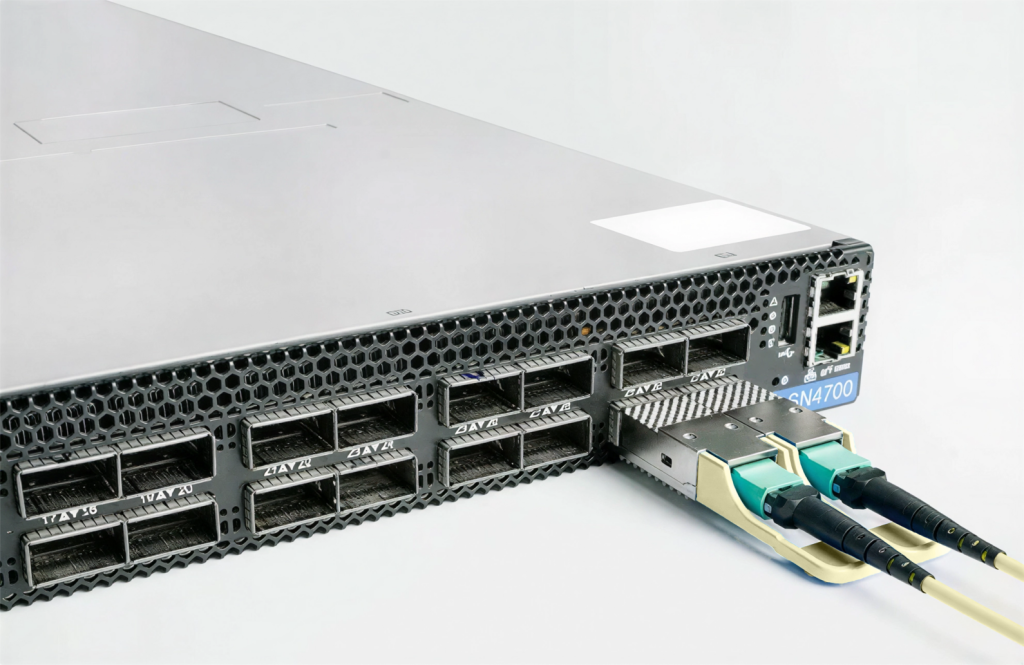
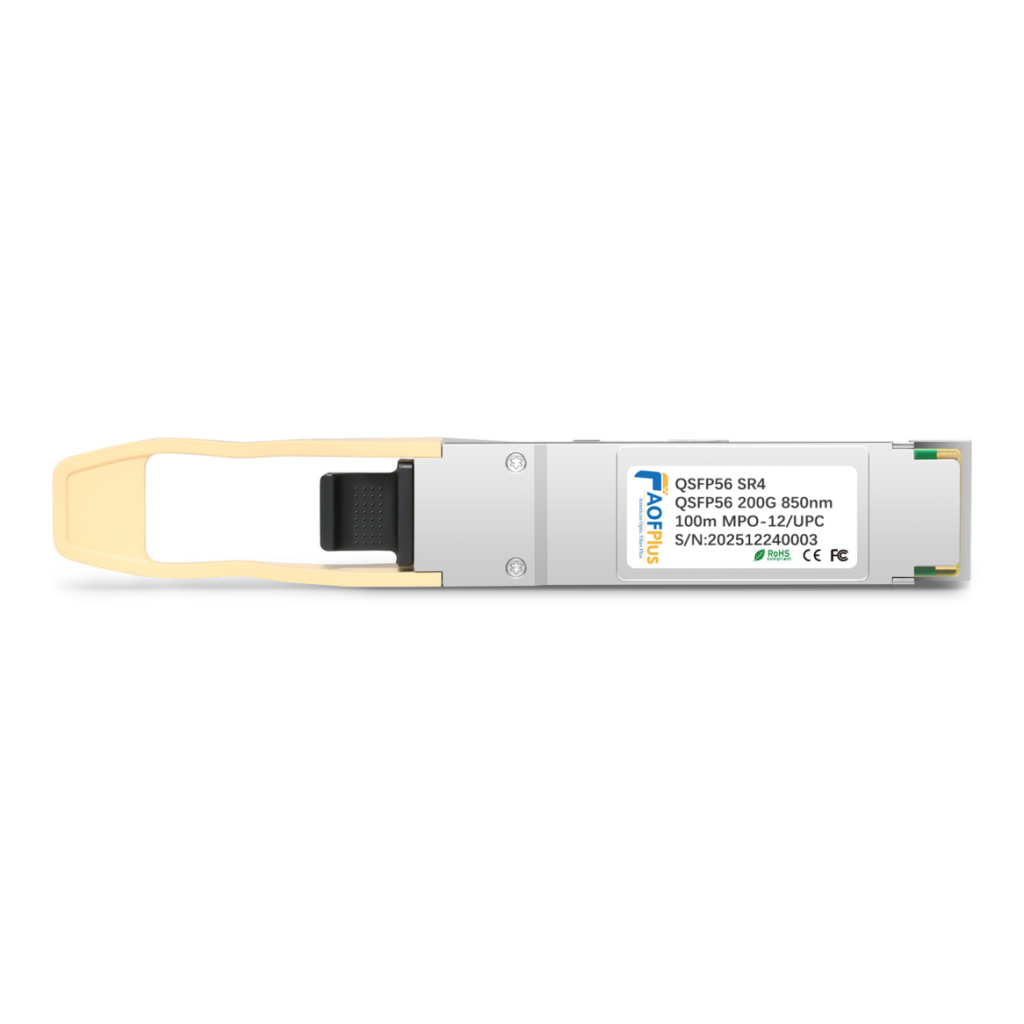
The 200G SR4 optical transceiver is a pluggable transceiver device compliant with standards such as IEEE 802.3bs. Its name contains three core pieces of information: “200G” represents a 200Gbps transmission rate, “SR” indicates optimization for short-reach applications, and “4” signifies its use of a 4-channel parallel architecture. This transceiver uses a QSFP56 package, which is compatible in size with QSFP28 (100G), and provides 200Gbps bidirectional data transmission over multimode fiber for data center equipment (such as leaf/spine switches and servers), enabling high-speed interconnection within racks or between adjacent racks.
Technical Principles of the 200G SR4 Optical Transceivers
The core technological breakthrough of the 200G SR4 fiber optic transceiver stems from its dual-engine drive:
4-Channel Parallel Transmission:
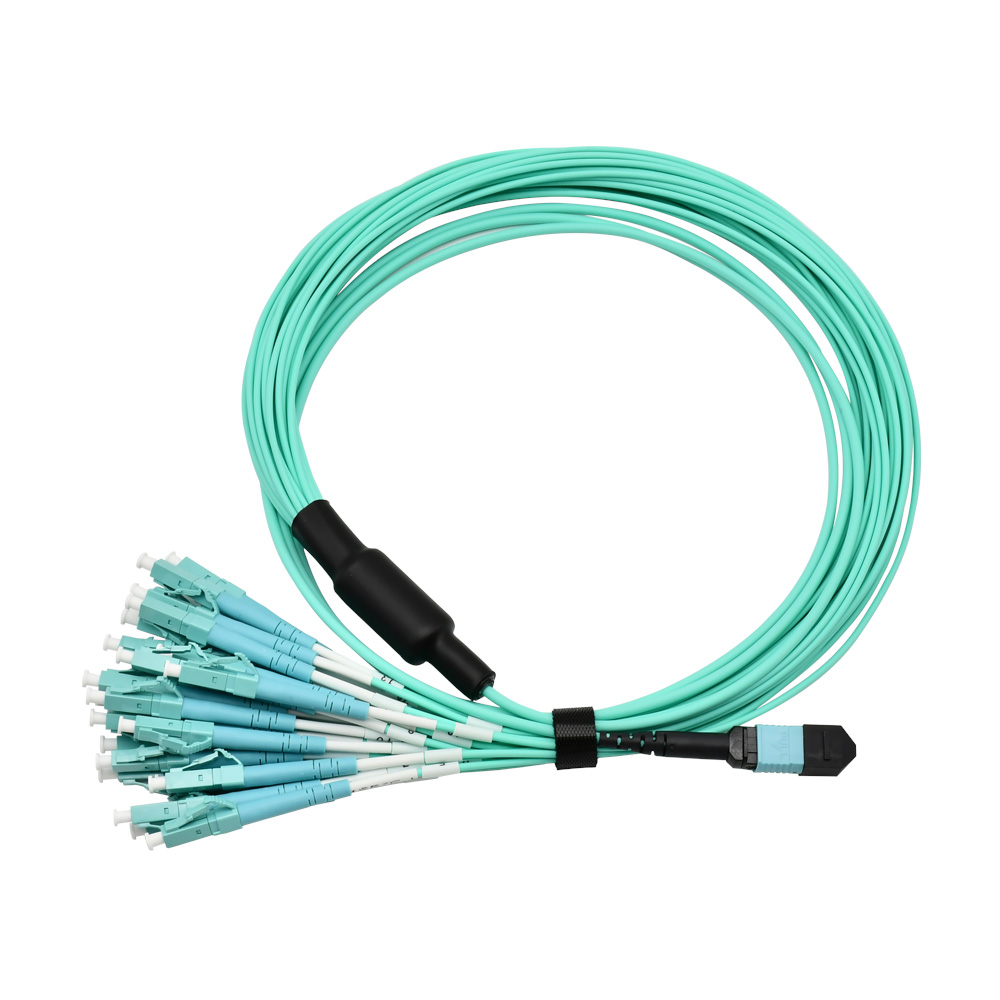
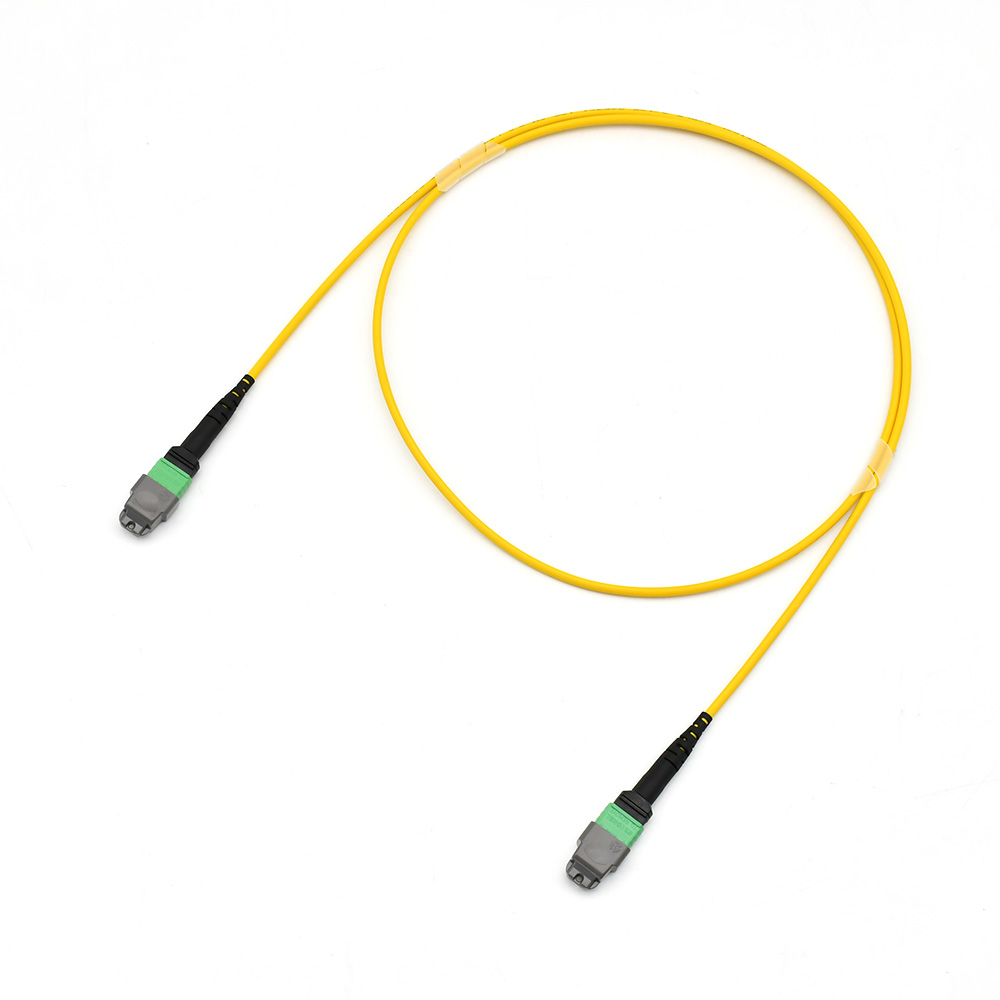
The transceiver integrates four independent VCSEL laser transmitters and photodetector (PD array) sets. The transmitting end splits the electrical signal into four parallel streams, which are converted into optical signals by the VCSELs and transmitted through an 8-core optical fiber (4 transmit, 4 receive) via an MPO interface. The receiving end then reconstructs the signal in reverse, reducing the single-channel rate to 50Gbps, significantly lowering technical difficulty and cost.
PAM4 Modulation Technology:
Traditional NRZ modulation requires a single-channel rate of 50Gbps, which poses a significant challenge for multimode fiber links. PAM4 technology uses 4-level pulse amplitude modulation, allowing each symbol to carry 2 bits of data (00/01/10/11). At a symbol rate of 53.125 Gbaud, the effective rate per channel reaches 106.25 Gbps, achieving a net 50 Gbps/channel after forward error correction (FEC), resulting in a total bandwidth of 200 Gbps across four channels. This approach doubles the data rate with the same physical bandwidth, significantly reducing power consumption and cost.
Core Application Scenarios of the 200G SR4 Optical Transceivers
The 200G SR4 optical transceiver plays a crucial role in the following scenarios due to its high bandwidth, low power consumption, high density, and cost-effectiveness:
Data center leaf-spine network architecture:
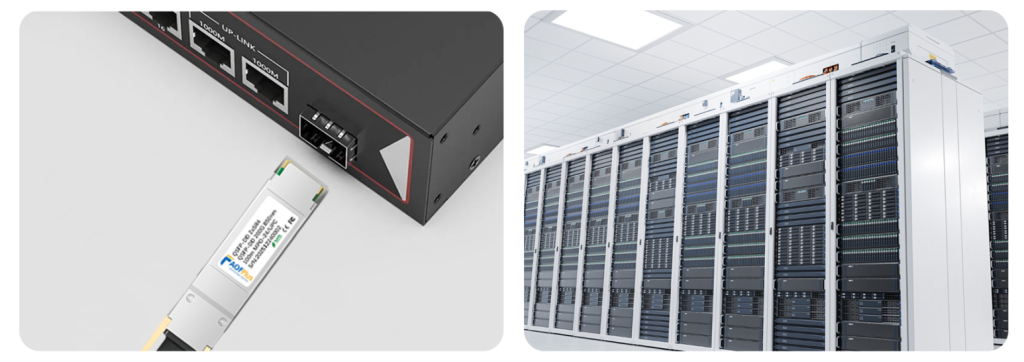
The leaf switch uplink is a critical link connecting the leaf switch (Top of Rack) to the spine switch. With servers commonly upgrading to 25G/100G, leaf switches require higher uplink bandwidth (200G/400G) to avoid bottlenecks. The 200G SR4 optical transceiver is an ideal choice for building a 200G spine layer, enabling non-blocking forwarding.
Artificial Intelligence (AI) Clusters:
Within GPU/TPU server clusters, nodes require extremely high communication bandwidth for data exchange (such as model parameter synchronization). 200G SR4 fiber transceivers provide low-latency, high-bandwidth connectivity, meeting the demanding requirements of AI training and computationally intensive scientific computing tasks. For example, they can be used to connect ports on NVLink or InfiniBand switches.
Hyperscale cloud data centers:
In large data centers, multiple ToR switches may be aggregated to higher-level aggregation switches via 200G SR4 optical transceiver links. And the 200G SR4 transceiver module connects computing resources, storage resources, and network resources, enabling flexible resource scheduling and efficient data flow.
Enterprise Data Center Core and Aggregation:
For large enterprise data centers, 200G SR4 transceivers can be used for interconnecting core switches or connecting the core layer to the aggregation layer, providing robust backbone bandwidth for internal business systems and private clouds.
Main Advantages of 200G SR4 Optical Transceivers
200G transceiver modules offer several significant advantages. Firstly, the QSFP56 form factor provides extremely high port density within a 1U panel space, supporting, for example, 32 or 36 ports, greatly improving data center connectivity efficiency. Secondly, compared to other 200G solutions (such as LR4/FR4), the SR4 optical transceiver has the lowest power consumption, effectively reducing data center OPEX costs and heat dissipation requirements. Furthermore, the 200G SR4 fiber transceiver utilizes mature VCSEL and parallel optics technologies, combined with the low cost of multimode fiber, resulting in an overall solution that offers excellent cost-effectiveness while maintaining high performance. Finally, this 200G SR4 transceiver provides a clear and economical upgrade path for data centers evolving from 100G (QSFP28 SR4) to 200G, helping users smoothly transition to higher-bandwidth network architectures.
Future Trend of 200G SR4 Optical Transceivers
With the advent of the 400G/800G era, SR4 technology is also evolving (e.g., 400G-SR4.2 / 400G-SR8). However, 200G SR4 fiber optic transceiver, with its maturity, cost-effectiveness, and excellent performance within established transmission distances, will remain the mainstream and primary choice for short-distance 200G interconnects in data centers for the next few years, especially in the spine layer of leaf-spine architectures and in HPC/AI clusters. While new technologies such as co-packaged optics (CPO) may reshape the form of optical interconnects in the future, pluggable transceivers (including SR4) still offer irreplaceable advantages in terms of maintainability and flexibility.
Conclusion
The 200G SR4 optical transceiver is a crucial cornerstone for data centers transitioning to higher data rates. It cleverly combines a mature 4-channel parallel optical architecture with advanced PAM4 modulation technology, enabling efficient and cost-effective 200Gbps short-distance transmission over mainstream multimode fiber. Its outstanding high density, low power consumption, and cost advantages make it indispensable in core scenarios such as data center leaf-spine networks, HPC/AI clusters, and cloud computing infrastructure. Despite the pressure to evolve to even higher data rates, the 200G SR4 transceiver, with its mature technology and excellent cost-performance ratio, will remain a reliable workhorse supporting high-speed interconnect networks within data centers for a considerable time to come. Understanding and selecting the appropriate 200G SR4 fiber optic transceiver is essential for building efficient, agile, and future-proof data center networks. As a leading supplier in the industry, AOFPLUS provides a wide range of high-quality fiber optic transceivers to meet diverse networking needs. We are committed to providing stable and reliable optical communication products to customers worldwide.