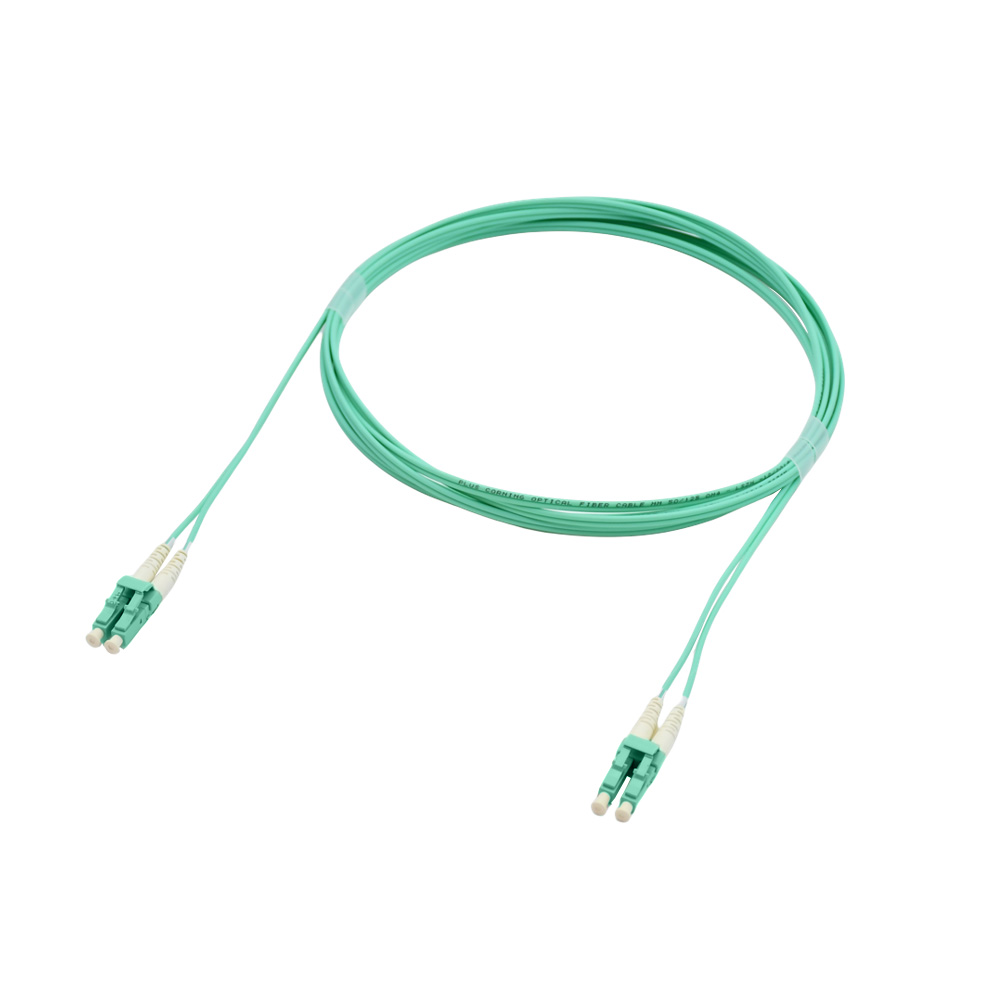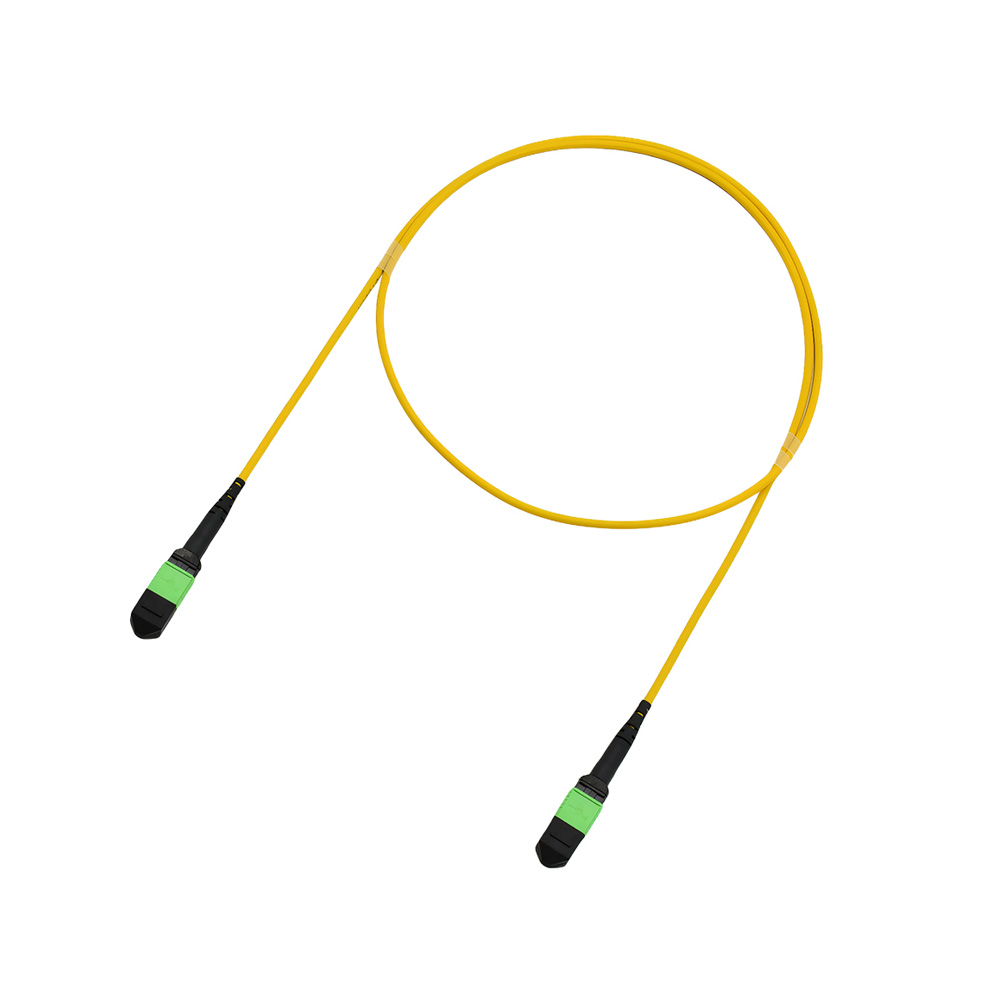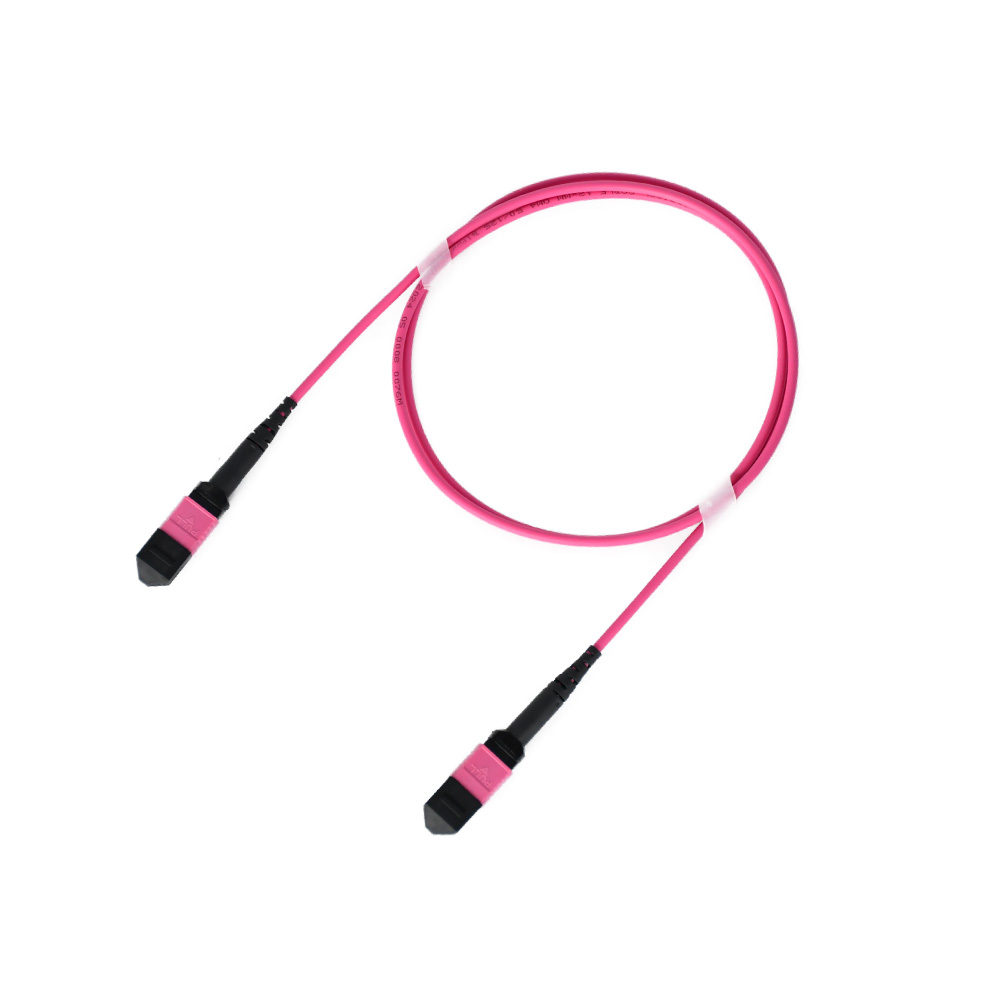
Single mode fiber patch cords cannot be used as multi-mode fiber patch cords, primarily due to significant differences in their core design, transmission characteristics, and compatibility. Forcing their use together will lead to a severe degradation of signal transmission quality or even complete communication failure. The following is a detailed analysis:
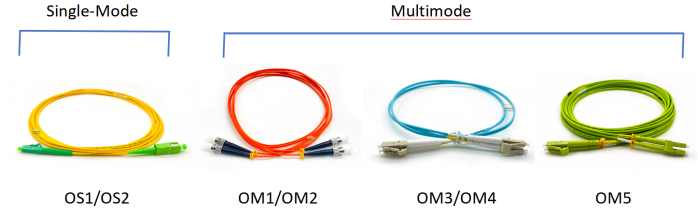
Key Design Differences: Fiber Core Diameter and Compatibility with the Light Source.
Single mode fiber:
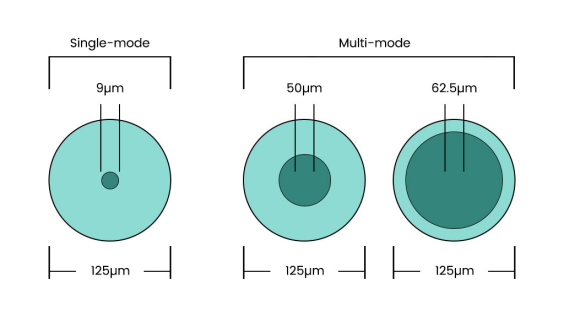
Core diameter: Typically 8-10μm, allowing only a single mode (fundamental mode) of light signal transmission.
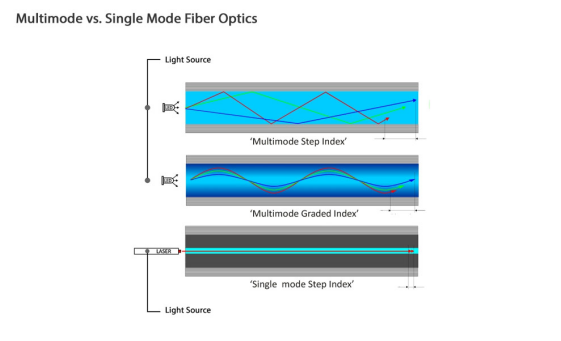
Light source matching: Requires a laser diode (LD) as the light source, which has a small beam divergence angle and strong directionality. This matches the core diameter of the single mode fiber, enabling low-loss, long-distance transmission.
Multimode fiber:
Core diameter: Typically 50μm or 62.5μm, allowing multiple modes (higher-order modes) of light signals to be transmitted simultaneously.
Light source matching: Commonly uses light-emitting diodes (LEDs) or vertical-cavity surface-emitting lasers (VCSELs) as the light source. These have a large beam divergence angle and require a larger core diameter of the multimode fiber to support multi-mode transmission.
Problem: If a single mode fiber patch cable is connected to a multimode device, its core diameter is too small to effectively couple the light signal emitted by the multimode light source. This results in most of the light energy being reflected or scattered at the edge of the fiber core, causing a sharp decrease in signal strength.
Transmission Characteristics Differences: Bandwidth and Loss
Single mode fiber:
Bandwidth: Theoretically extremely high bandwidth (up to tens of THz), supporting long-distance transmission at 10Gbps, 40Gbps, 100Gbps, and even higher speeds (up to tens to hundreds of kilometers).
Loss: Primarily affected by material absorption and Rayleigh scattering, with typical loss of 0.2-0.4 dB/km (1310nm/1550nm wavelength).
Multimode fiber:
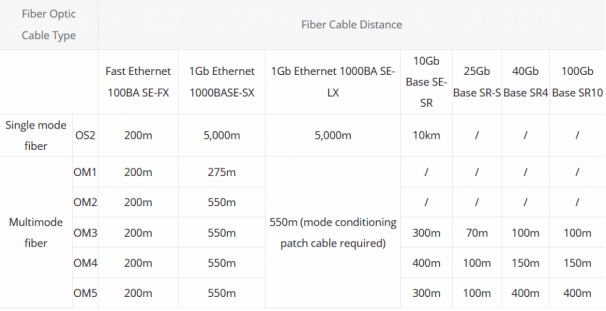
Bandwidth: Limited by intermodal dispersion, resulting in lower bandwidth (typically a few hundred MHz·km to a few GHz·km), supporting short-distance transmission at lower speeds such as 1Gbps and 10Gbps (usually not exceeding 550 meters).
Loss: In addition to material absorption and Rayleigh scattering, intermodal dispersion causes signal pulse broadening, further limiting transmission distance and speed.
Problem: If a single mode fiber optic patch cord is used in a multimode system, its high bandwidth characteristics cannot be utilized by the multimode equipment. Instead, the core mismatch leads to increased intermodal dispersion and degraded signal quality.
Compatibility Risks: Device Damage and System Failure
Light source power mismatch:
Single mode fiber optic patch cords are designed for high-power lasers, while multimode devices may use low-power LEDs or VCSELs. Forcing a connection may result in excessive light source power, damaging the optical receiving module of the multimode device.
Conversely, if the multimode device uses a high-power light source, the single mode fiber patch cord may be damaged due to its inability to withstand the power.
Connector type differences:
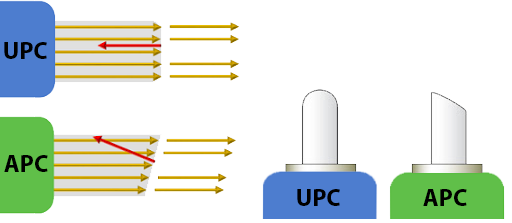
Single mode fiber optic patch cords typically use SC/APC or LC/APC connectors (angled polished to reduce reflection), while multimode fiber optic patch cords mostly use SC/UPC or LC/UPC connectors (flat polished).
Mixing different connector types can lead to poor physical contact, increasing insertion loss and return loss.
System failure risks:
Ineffective signal transmission can cause link interruptions, affecting network stability.
Long-term mixing may accelerate fiber aging and reduce system lifespan.
Practical Application Suggestions
Strictly differentiate between usage scenarios:
Single mode fiber patch cords: Suitable for long-distance, high-speed, and high-bandwidth applications, such as metropolitan area networks, backbone networks, and interconnections between data centers.
Multimode fiber patch cords: Suitable for short-distance, low-speed applications, such as local area networks, enterprise internal networks, and internal wiring within equipment rooms.
Avoid Mixing
Never connect single mode fiber optic patch cords to multimode equipment, or vice versa.
If compatibility between different systems is required, consider using a mode converter (such as a singlemode to multimode fiber converter), but the cost and performance requirements should be evaluated.
Identification and Management:
Clearly identify fiber optic patch cords (e.g., using color coding and labels) to prevent incorrect connections.
Regularly test link quality using professional fiber optic testing tools (such as an OTDR) to promptly identify and resolve problems.