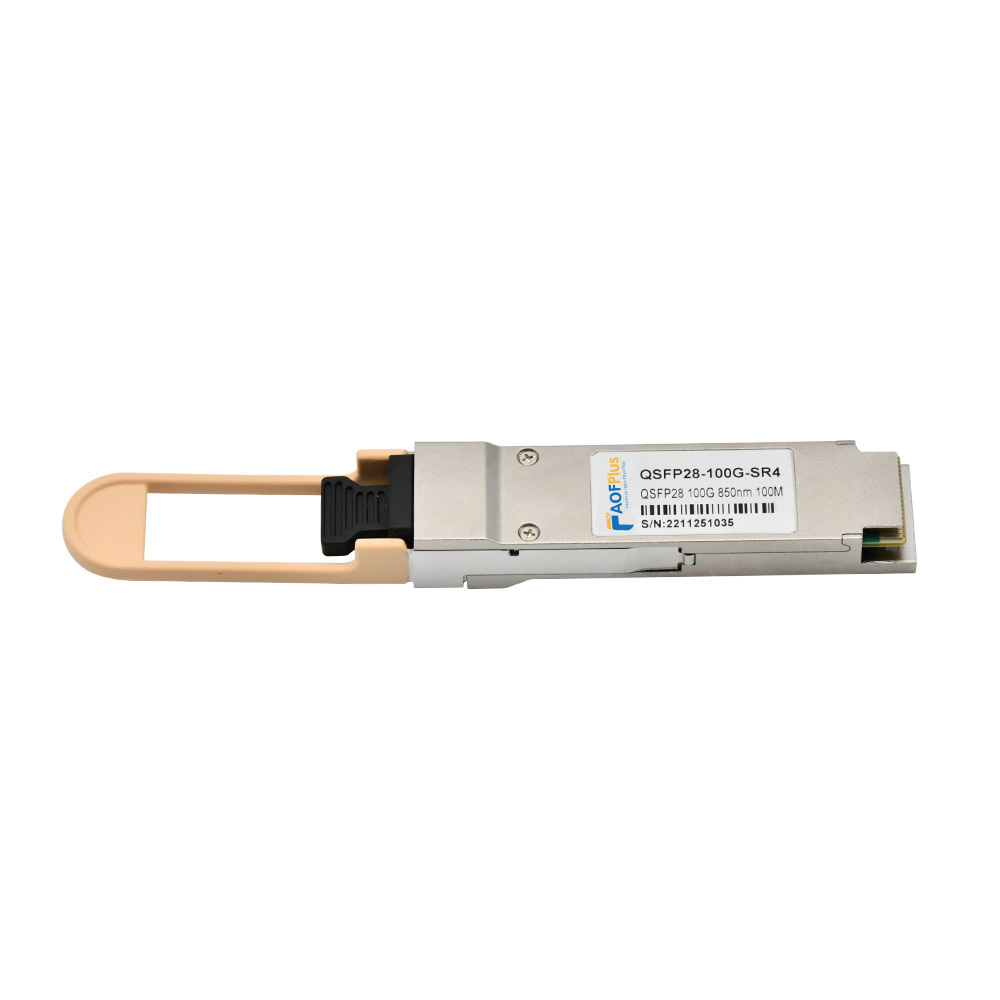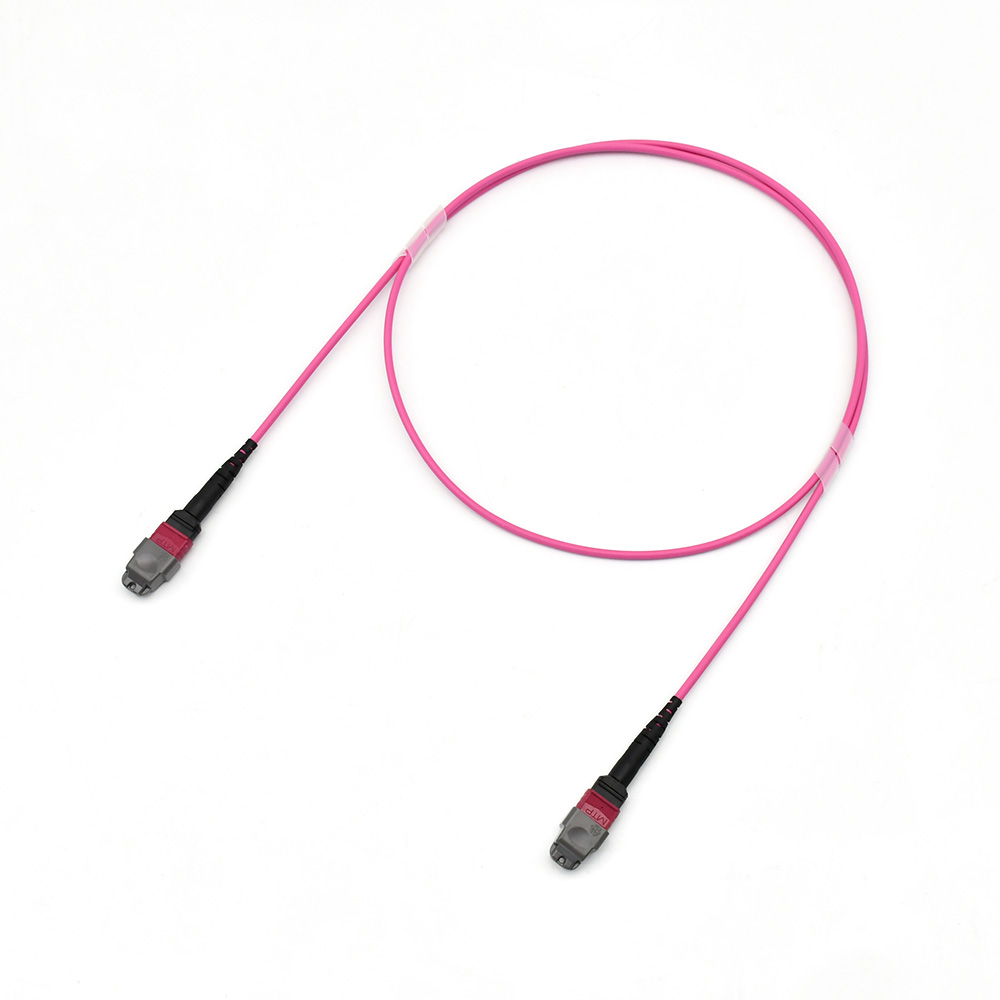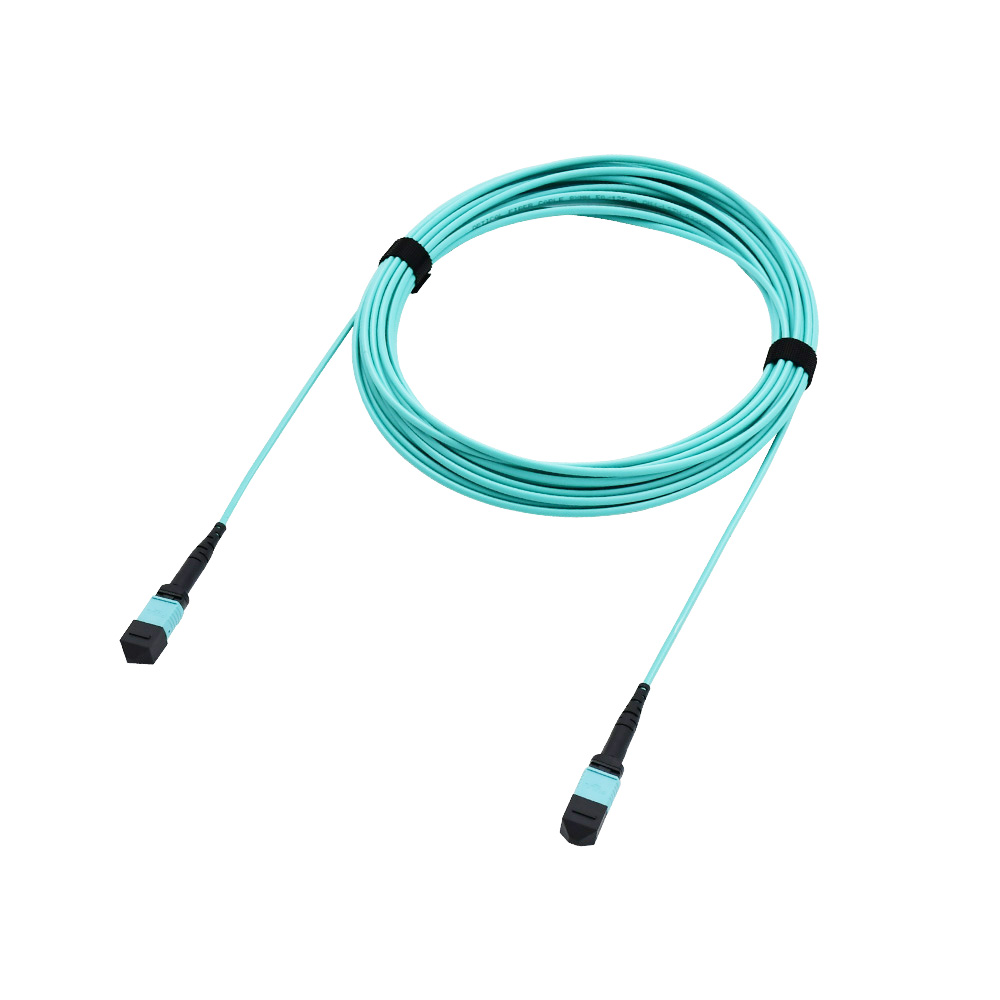
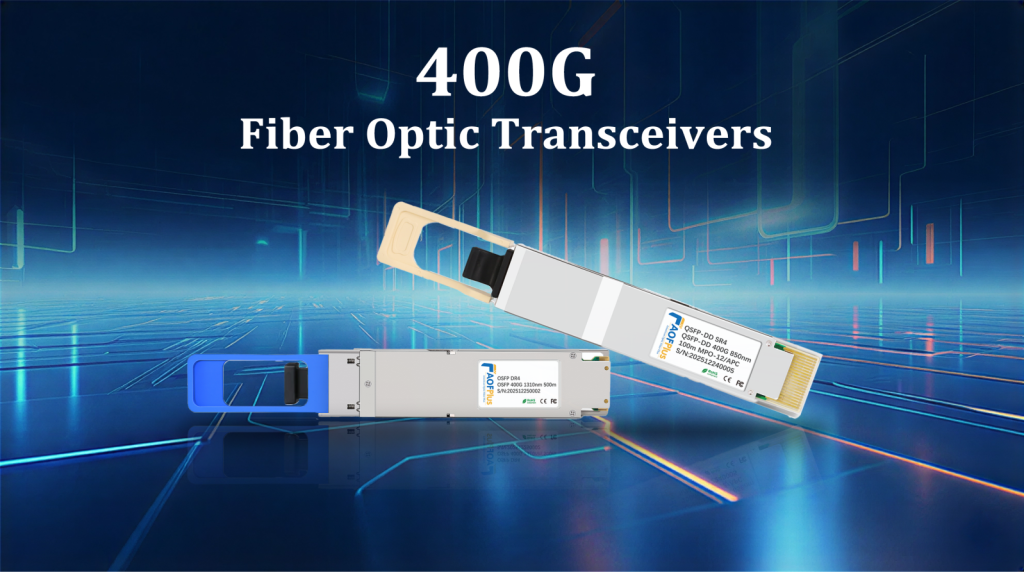
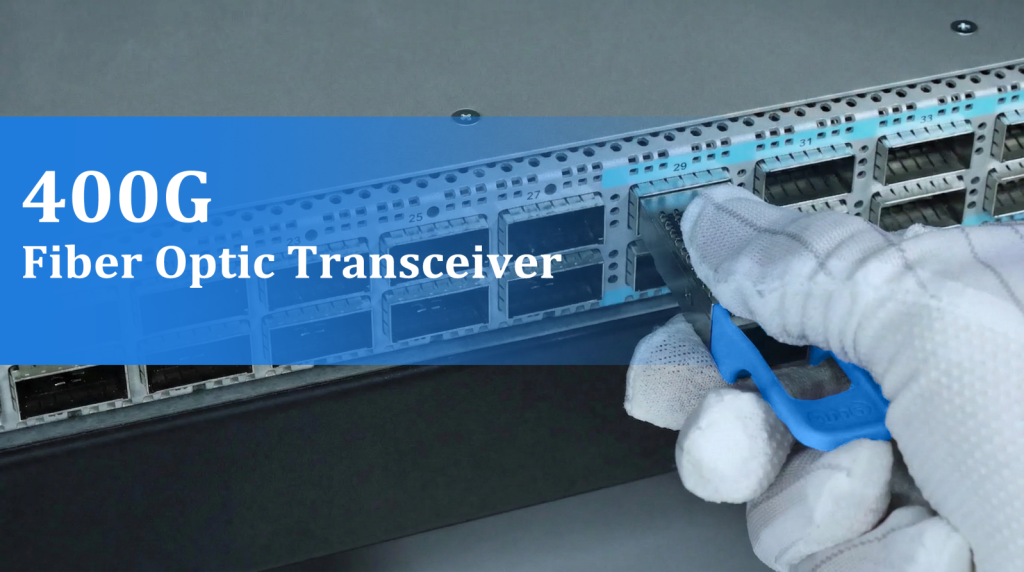
400G optical transceivers are a new generation of high-speed optical interconnect devices for high-performance data centers and telecommunication networks, supporting data transmission rates of up to 400Gbps per port. These transceiver modules typically employ multiplexing techniques (such as 8×50G, 4×100G, or 16×25G), combined with advanced PAM4 modulation and high-speed silicon photonics technology, to achieve higher bandwidth density and low power consumption. 400G fiber transceivers support various transmission distances, from short-range (SR4/DR4) to medium- and long-range (FR4/LR4), meeting the needs of different network architectures.
Breakthrough in Core Technology for 400G Optical Transceivers
Currently, mainstream 400G fiber optic transceivers primarily utilize two packaging formats: QSFP-DD and OSFP, incorporating several technological innovations at the physical layer:
Upgraded advanced modulation technology:
400G fiber transceivers commonly employ PAM4 (four-level pulse amplitude modulation) technology, which doubles data transmission efficiency compared to traditional NRZ (two-level) modulation. By increasing the single-wavelength rate from the original 25Gbps to 50Gbps, 400G high-speed transmission can be achieved through multi-wavelength combinations, such as 8-channel 50Gbps or 4-channel 100Gbps configurations. Simultaneously, the integrated DSP chip within the module performs signal equalization, jitter compensation, and forward error correction (FEC), controlling the bit error rate (BER) to a level below 1E-12, thus ensuring the stability and reliability of high-speed data transmission.
Optoelectronic collaborative design innovation:
To further enhance transmission performance and module integration, the 400G transceiver module incorporates several innovations in its optoelectronic design. Utilizing Silicon Photonics technology, the laser and modulator are integrated onto a single chip, reducing the module size by approximately 40% and significantly improving space utilization. Simultaneously, the use of thin-film lithium niobate (Thin-Film LiNbO3) modulators allows the module to operate over a wider temperature range (-40℃ to 85℃), enhancing its adaptability in industrial and telecommunications environments. Furthermore, through optimized circuit design and optical layout, the module achieves low-power operation, with a power consumption of 10-14W per transceiver, a reduction of approximately 35% compared to the previous generation, improving energy efficiency while maintaining performance.
Applications of 400G Fiber Optic Transceivers
400G transceiver modules are rapidly becoming a key component in modern network infrastructure due to their ultra-high bandwidth and long-distance transmission capabilities. They are primarily used in the following scenarios:
Data Center Interconnection (DCI):
In the modern era of cloud computing and big data, enterprises and cloud service providers typically operate multiple data centers distributed across different cities or even countries. 400G optical transceivers enable high-speed, low-latency interconnection between these data centers, supporting large-scale data synchronization and real-time access. With its high bandwidth of 400Gbps and low bit error rate, the 400G fiber transceiver significantly improves the efficiency of data transmission across data centers, allowing workloads such as distributed storage, virtualization applications, and big data analytics to flow quickly and stably between different data centers. Simultaneously, 400G transceiver supports long-distance single-mode fiber transmission and short-distance multi-mode fiber interconnection, providing flexible network deployment solutions for data center interconnection, optimizing resource scheduling, and improving business continuity. It is a core component in building modern high-performance data center network architectures.
High-Performance Computing (HPC):
In high-performance computing environments, hundreds or thousands of computing nodes require intensive data exchange to complete complex scientific simulations, climate forecasting, artificial intelligence training, and other large-scale computing tasks. The high-speed data transmission capabilities and low latency characteristics of 400G optical transceivers ensure efficient and stable data exchange between computing nodes, significantly improving computing efficiency. The integrated DSP chip and forward error correction function within the module reduce the bit error rate, guaranteeing data integrity and reliability for computing tasks. Furthermore, the low-power design and high integration of 400G transceiver modules make them suitable for deployment in dense HPC racks, saving space and reducing energy consumption, providing the stable network foundation required for high-performance computing platforms in research institutions and large enterprises.
Enterprise Wide Area Networks (WANs) and inter-regional networks:
For businesses operating across regions or globally, maintaining high-speed network connectivity between branches, remote offices, and headquarters is crucial for ensuring efficient business operations. 400G transceiver modules provide high-bandwidth, low-latency fiber optic interconnectivity, enabling businesses to enjoy a stable and smooth network experience for video conferencing, remote collaboration, cloud application access, and large file transfers. Their long-distance transmission capabilities mean that businesses can deploy wide-area networks across cities or even continents without sacrificing performance or requiring additional relay equipment, thus reducing network complexity and construction costs. Simultaneously, high reliability and scalability allow businesses to flexibly adapt to business growth and future network upgrade needs, improving overall operational efficiency and digital transformation capabilities.
Industry Trends and Future Outlook
With the implementation of the OIF 800G-LR1 standard, 400G optical transceivers are penetrating into more refined application scenarios. In the future, with the further development of silicon photonics, module integration, and intelligent technologies, 400G fiber transceivers will play an even more central role in high-density, high-speed interconnects and low-power consumption scenarios, providing solid support for next-generation ultra-large-scale data centers and high-speed communication networks.
Conclusion
400G optical transceivers represent a major leap forward in high-speed optical interconnect technology, combining advanced modulation, optoelectronic integration, and low-power design to meet the demands of modern data centers, high-performance computing, and enterprise networks. With their high bandwidth, long-distance transmission capabilities, and reliability, these transceivers not only address the growing requirements of cloud computing, big data, and next-generation Ethernet, but also provide scalable and efficient solutions for future network expansion. As silicon photonics, intelligent integration, and high-density packaging technologies continue to evolve, 400G fiber transceivers will play an increasingly pivotal role in enabling ultra-high-speed, energy-efficient, and resilient network infrastructures for the next generation of data-intensive applications. As a leading fiber transceivers supplier, AOFPLUS offers a wide range of high-quality fiber optic transceivers to meet diverse networking needs. For example, 10G, 40G, 100G, 200G, 400G, and 800G optical transceivers.