With the rapid development of cloud computing, big data, and Ethernet, carriers are upgrading their data centers to higher data rates, which further increases the demand for 100G. The landscape is shifting towards 100G, and the 100G QSFP28 ZR4 transceiver is a product of this big data era.
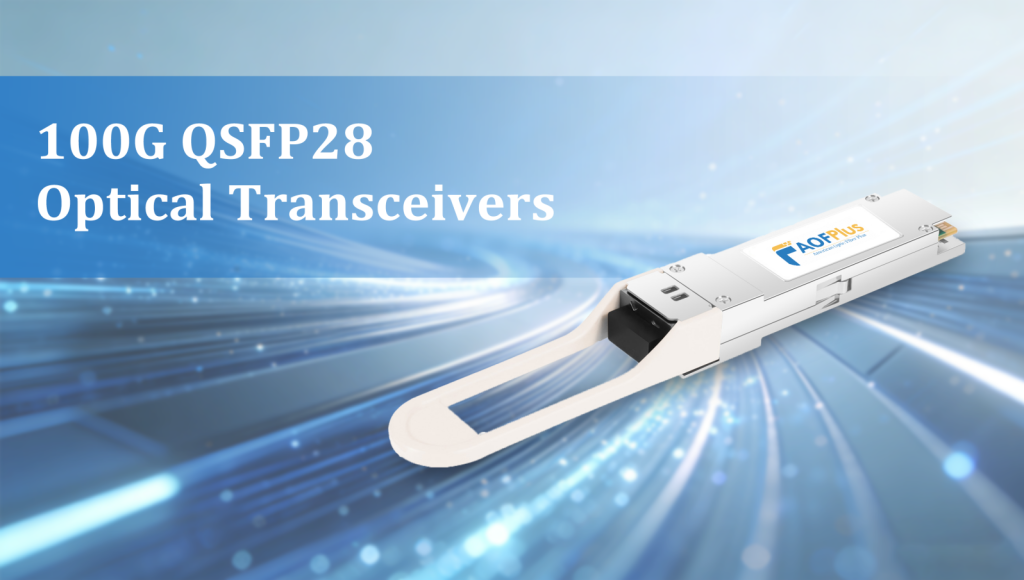
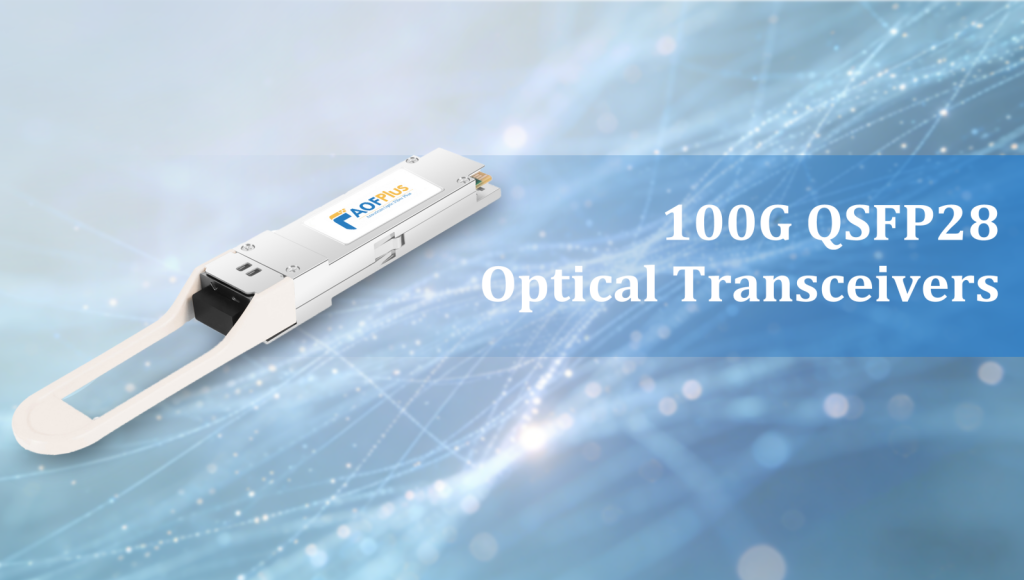
100G QSFP28 optical transceivers include SR4, PSM4, LR4, CWDM4, ER4, and ZR4. The 100G QSFP28 ZR4 fiber optic transceiver is primarily used in data center switches and routers for long-distance transmission connections. It utilizes 4-channel 28G NRZ wavelength division multiplexing technology (LWDM4) and is a 4-channel full-duplex transceiver module, mainly applied in 100G Ethernet, data centers, and telecommunications.
Features of the 100G QSFP28 ZR4 Optical Transceivers
In terms of product features, the 100G QSFP28 ZR4 transceiver module uses a hot-pluggable QSFP28 package, operates at a temperature range of 0°C-70°C, and has a maximum data rate of up to 103.125Gbps (4x25G NRZ). Through cost optimization, it can achieve transmission distances of up to 80km, and with FEC enabled, the transmission distance can reach up to 90km over a pair of single-mode fibers.
Structurally, in the transmitter section of the 100G QSFP28 ZR4 fiber transceiver, four-channel serial data is recovered by a CDR and transmitted to four laser drivers. In the receiver section, the four-channel optical signals are amplified by an SOA and then demultiplexed by an integrated optical demultiplexer. Each optical signal is recovered by a PIN detector and finally transmitted through a transimpedance amplifier and CDR to a CAUI-4 compliant output driver.
In addition, 100G QSFP28 ZR4 transceiver is small in size and has low power consumption, with a maximum power consumption of less than 6W. It provides a point-to-point solution for data centers. It features a dual LC optical interface, built-in digital diagnostic functions, and complies with RoHS environmental standards (lead-free), QSFP28 MSA, and 100G ZR4 Ethernet standards.
Applications of 100G QSFP28 ZR4 Optical Transceivers
100G QSFP28 ZR4 fiber transceivers play an important role in many fields including data centers, High-performance computing (HPC) and enterprise network, thanks to their excellent performance.
In modern data centers, high-speed data transmission and low-latency network connectivity have become crucial. The 100G QSFP28 ZR4 fiber optic transceiver, with its transmission distance of up to 80 kilometers and 100Gbps bandwidth, is particularly suitable for inter-data center connections. Data center interconnect (DCI) connects data centers in different geographical locations, allowing data to flow rapidly within cloud computing platforms and supporting large-scale applications such as distributed computing, big data analytics, and content distribution.
High-performance computing (HPC) involves the parallel processing of massive computing resources, requiring high-bandwidth and low-latency network connections to ensure high-speed data exchange between computing nodes. The 100G QSFP28 ZR4 optical transceiver, with its powerful data transmission capabilities and long-distance support, has become an ideal choice for HPC environments. Whether it’s research institutions conducting complex simulations or large enterprises processing massive amounts of data, the 100G QSFP28 ZR4 fiber transceiver ensures fast and efficient data exchange between computing nodes, thereby accelerating the completion of computing tasks. It provides high-speed and stable network support for high-performance computing platforms and is an important infrastructure supporting demanding applications such as modern scientific computing, climate modeling, and artificial intelligence training.
In large enterprises, especially those with regional or global operations, maintaining high-speed and stable network connectivity between branches or remote offices is crucial. The 100G QSFP28 ZR4 transceiver provides enterprises with high-bandwidth, low-latency fiber optic connectivity, particularly suitable for Wide Area Network (WAN) environments, enabling efficient real-time data exchange between different locations. As enterprises increasingly rely on high-traffic applications such as cloud applications, video conferencing, and remote collaboration, the 100G QSFP28 ZR4 transceiver module provides sufficient bandwidth to ensure smooth data transmission, reduce network bottlenecks, and improve the efficiency and reliability of business operations. Furthermore, the long-distance transmission capability of the 100G QSFP28 ZR4 optical transceiver allows enterprises to span greater distances without sacrificing performance, providing an ideal network solution for distributed offices and global operations.
Conclusion
The 100G QSFP28 ZR4 optical transceiver, with its high bandwidth, long-distance transmission capabilities, and low latency characteristics, is becoming an indispensable core component in modern data centers, HPC environments, and enterprise networks. It not only meets the demands of cloud computing, big data, and high-speed Ethernet development but also provides reliable network support for inter-data center connectivity, distributed computing, and the efficient operation of global enterprises. With the continuous growth of data traffic and the ongoing pursuit of high-performance networks, the 100G QSFP28 ZR4 fiber transceiver will undoubtedly play an even more crucial role in future network upgrades and infrastructure development, providing a solid foundation for high-speed interconnectivity in the information age. As a leading fiber optic transceivers provider in the industry, AOFPLUS offers a full range of high-quality transceivers such as 10G SFP+, 40G QSFP+, 100G QSFP28, 200G QSFP56, 400 QSFP-DD transceivers and so on, covering various data rates and application scenarios to meet diverse networking needs.