In the fast paced world of data communication and networking, understanding the components that power our digital infrastructure is crucial. One such component that plays a significant role in high speed data transfer is the Direct Attach Copper Cable (DAC Cable) .
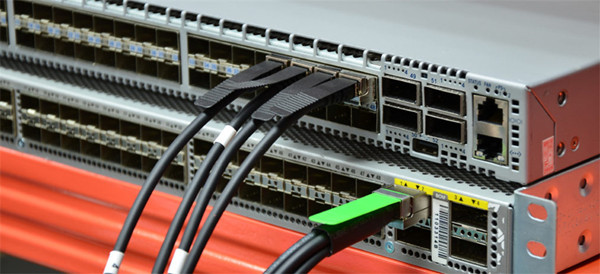
Direct Attach Copper Cable is a type of cable used to establish a direct connection between two networking devices, such as servers, switches, or storage systems. As the name implies, it uses copper conductors to transmit electrical signals. Unlike fiber optic cables that use light to transfer data, DAC cable rely on the good electrical conductivity of copper. These cables are pre-terminated, which means they come with connectors already attached at both ends, making installation quick and easy.
Types of DAC Cables – Classification by Signal Conditioning
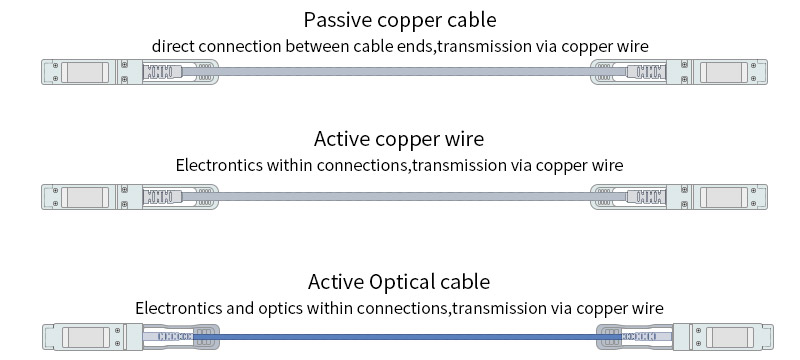
Direct Attach Cable (DAC) is comprised of a twinax copper cable terminated with SFP+/SFP28/QSFP+/QSFP56/QSFP28 connectors on both ends, which can provide an electrical connection directly into active equipment. DAC cables can be classified into twofold: passive DAC cable & active DAC cable. The former can deliver without signal conditioning, while the latter has electric components inside the transceivers to boost signals. Normally speaking, DAC cables are used to connect switches, servers, and storage inside racks.
Passive DAC Cable: A passive DAC cable doesn’t have electronics for signal conditioning and amplification. This results in a lower cost option, but it also has a limited length. For instance, for a 10G data rate, the typical length is around 7 meters. Over longer distances, a passive cable is more likely to generate bit errors.
Active DAC Cable: An active DAC cable contains a microprocessor and other electronics for signal conditioning and amplification. This allows for better performance in longer – distance transmission compared to passive ones. However, due to the additional electronics, it is more expensive than a passive cable and even more costly than some Active Optical Cables (AOCs). Before purchasing an active cable, it’s advisable to compare the total cost with an AOC or an optical transceiver to find a more cost – effective solution.
Unlock the Advantages of DAC Cables for Your Network
DAC cable is usually used to connect switches, servers, and storage within a rack.
Power Consumption
The power consumption of DAC active cable is less than 1w, the power consumption of passive cables is less than 0.15w, which is almost zero, due to the thermal design of direct-attached copper cables. Therefore, the operating expenses in terms of power consumption will be reduced when adopting the DAC option.
Transmission Distance
DAC cable is limited to 10 meters in link length (passive DAC: 7 meters; active DAC: 10 meters). In summary, DAC cabling solutions are suitable for short-distance transmission. The maximum distance that a signal can be transmitted by a DAC cable depends on the data rate. Link length decreases as data rates increase, for example, 100G DAC cable is limited to 5 meters.
Cost
Roughly speaking, the internal structure of DAC cable is relatively simple, with fewer components, and copper cables are much cheaper than fiber. When implemented in large data centers, using DAC cable in large quantities will save money. For short-distance applications, DAC does provide a cost-effective solution.
EMI Immunity
Electromagnetic interference (EMI) refers to interference generated by external sources that can affect electrical circuits. As mentioned earlier, active optical cables contain optical fibers a dielectric that cannot conduct electrical current. The nature of copper sending electrical signals, direct-attach copper cable is susceptible to EMI. Therefore, the environment is very important to avoid undesirable responses, performance degradation, or complete system failure.
DAC Cable Typical Application
Data Centers: DAC cables are extensively used in data centers for short distance connections between servers, top of rack switches, and storage area networks (SANs). They can support high speed data transfer rates, such as 10Gbps, 25Gbps, 40Gbps, and even 100Gbps, meeting the demands of modern data intensive applications.
Enterprise Networks: In corporate networks, DACs can be used for connecting network equipment within a building or a campus. They provide a reliable and cost effective solution for local area network (LAN) connections, enabling seamless communication between different departments and devices.
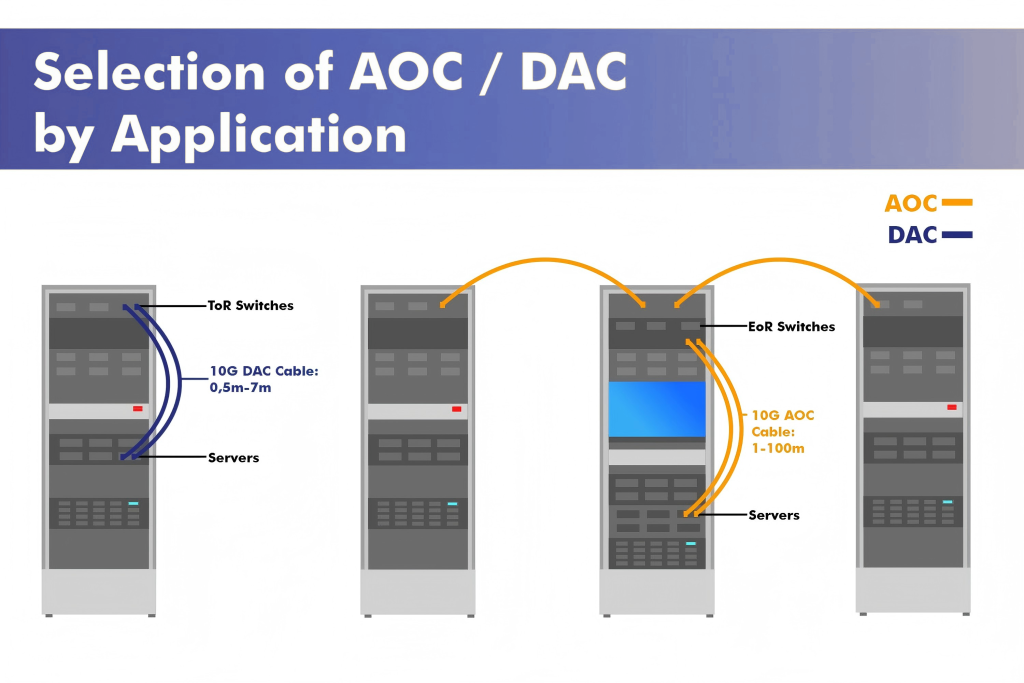
For example, the major utilization of 10G SFP+ DAC cable is connecting switches/servers to switches within or adjacent to the rack. In other words, these 10G direct attach cables can be used as an alternative for ToR (Top of Rack) interconnections between 10G ToR switch and server or the stacking of 10GbE switches. Since 10G SFP+ DAC cable typically supports a link length of 7 m with low power consumption, low latency and low cost, this option is an ideal choice for this short-range server-to-switch connections.
Conclusion
Direct Attach Copper (DAC) Cable is a valuable tool in the world of networking, offering cost effective, reliable, and low power consuming solutions for short distance, high speed data transmission. Understanding its features, types, and applications can help network engineers and enthusiasts make informed decisions when setting up or upgrading their networks.