It is critical for data centers to have convenient, stable connections for improved performance and uninterrupted operations. Direct attach copper cable (DAC) and active optical cable (AOC) is two of the main components that make this possible. These cables are used to improve data transmission between servers, switches, storage systems, and other devices within the data center. Each type of cable has its own advantages and disadvantages depending on the specific needs or limitations of a particular environment. What follows is an analysis of the differences between DAC and AOC, including their use cases and selection considerations for IT experts. This way, operators will be able to evolve their networks efficiently while making smart choices so that they can scale as much as possible to meet their needs.
What Is Direct Attach Copper Cable (DAC)?
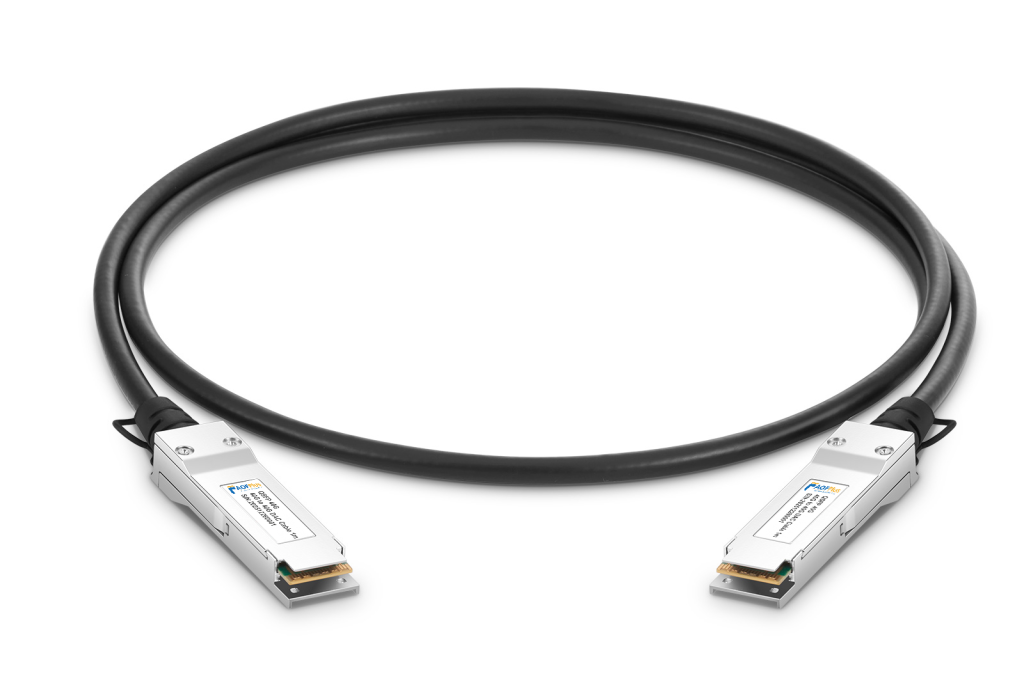
Direct Attach Copper Cable (DAC) is a copper cable with transceivers attached to both ends. DAC cable is widely used for short distance connections in data centers, typically 1 to 7 meters in length. DAC cable is known for their low latency, high reliability, and cost-effectiveness, which makes them ideal for interconnecting servers or switches within a rack or adjacent racks. DAC is available in both passive and active variants; passive DACs have signal processing electronics, while active DACs do not; therefore, they consume less power and can only be used over short distances due to their simplicity. On the other hand, active DACs have signal processing electronics that help maintain signal integrity throughout the transmission distance, thus supporting longer lengths.
What Is Active Optical Cables (AOC)?
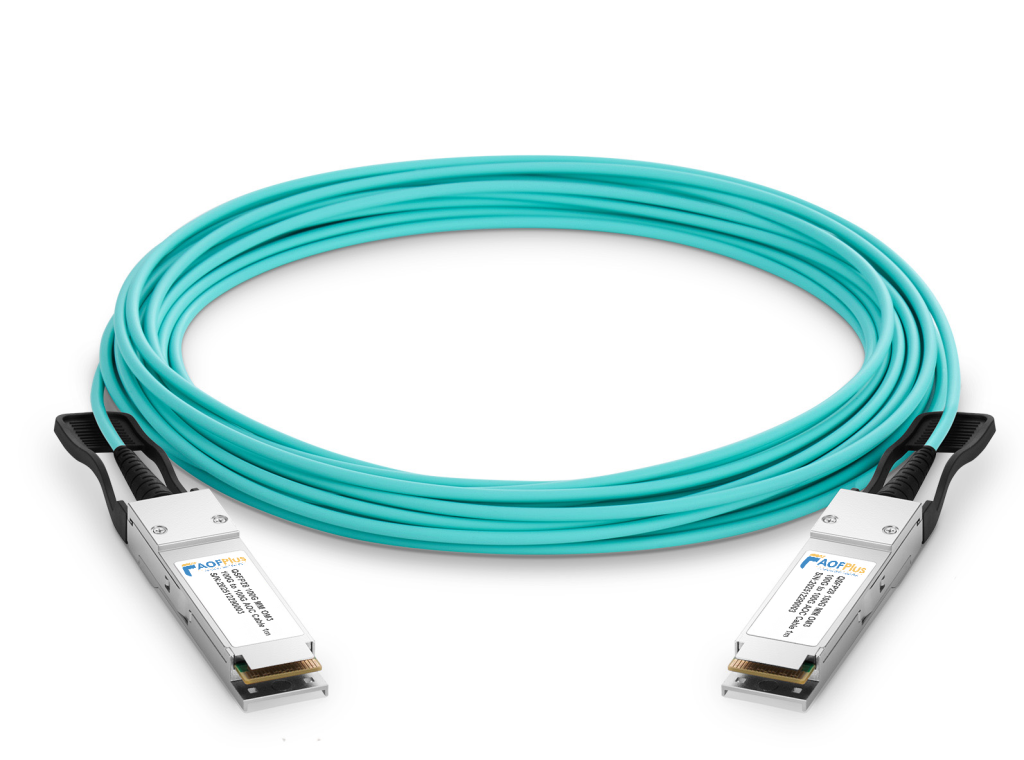
Active optical cable (AOC) is cable that use optical fibers instead of traditional copper wires for high speed data transmission. Compared to direct attach copper cable (DAC), which use electrical signals to send information between devices, AOC cable uses light to transmit data at higher bandwidths over longer distances. Developed specifically to prevent signal degradation over long distances, these cables provide low electromagnetic interference and crosstalk reduction. As a result, they are particularly useful in hyperscale environments or other situations where signal integrity must be maintained over significant distances.
Key Differences Between DAC And AOC Cables
Differentiating Direct Attach Cables And Active Optical Cables
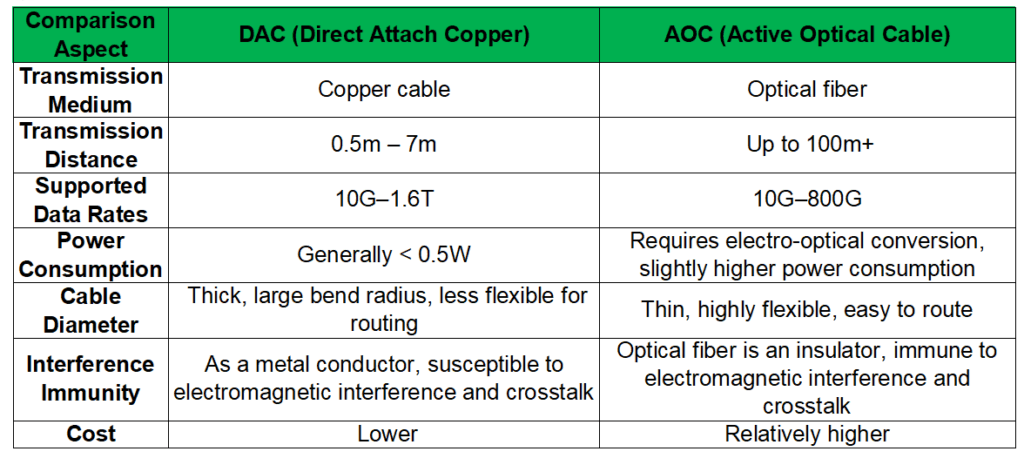
Transmission distance: Direct attach copper cable (DAC) typically has a limited transmission range, usually no more than 10 meters; however, active optical cable (AOC) are able to cover 100 meters or even longer.
Signal quality: DAC cables are susceptible to signal degradation and electromagnetic interference, but AOC cables are immune to these issues, ensuring data integrity over longer distances.
Power consumption: Over short distances, DAC cable consume less power than AOC cable, which are suitable for long-distance transmission, but they require power to the transceiver.
Installation and management: AOC cable is lightweight and flexible, simplifying installation and cable management, while DAC cable is heavier and less flexible.
Strength and environmental adaptability: In terms of durability, AOC cable are more rugged and can withstand a wide range of temperatures, which is not the case with DAC cable, which operate in relatively narrow environmental conditions.
Cable Length Considerations: AOC Cable vs. DAC Cable
When you consider the length of the cable, DAC cable is best suited for short distance applications, typically under 10 meters, making them ideal for inter rack or intra rack connections. In contrast, AOC cable can support longer distances, typically over 100 meters, making them better suited for inter-building or large data center connections. In addition, AOC is flexible, which makes it easy to install and manage cables over longer distances, while DAC cable is rigid and may have difficulty at similar distances. Therefore, you should choose an AOC or DAC based on the specific distance and environmental requirements in a given deployment scenario.

Data Rate: DAC vs AOC
From a data rate perspective, both direct attach copper cable (DAC) and active optical cable (AOC) are powerful, but they perform differently in different applications and distances. Typically, DAC cable can handle data speeds of up to 400Gbps, which makes them ideal for shorter-distance, high-speed connections in data centers. Still, their capabilities decrease with distance due to signal attenuation. In contrast, AOC cable maintain excellent performance even over long distances (sometimes over 100 meters) using similar data rate support using fiber optic technology, so they are more suitable for situations where large amounts of information must be transmitted quickly over long distances while ensuring consistency in signal strength without being affected by electromagnetic interference like DACs. Therefore, a DAC or AOC should be selected based on the distance between things and the speed required at each point in the network design architecture.
Conclusion
According to different application requirements, it can be concluded that active optical cable (AOC) or direct attach copper cable (DAC) is a better cabling solution for IDC network. When the transmission requirements of the data center are few, DAC cable solution is recommended as a better internet cable solution for interconnection between servers and switches within 5m/10m, while AOC fiber solution is very suitable for interconnection between switches. Of course, there is no need to analyze which solution is better, that is, AOC cable is always your first choice, because if you don’t care about the budget, performance is much more important than cost. AOFPLUS, as a one-stop fiber optic product supplier, we are offering all kind of DAC cable and AOC cable, shop with us now.