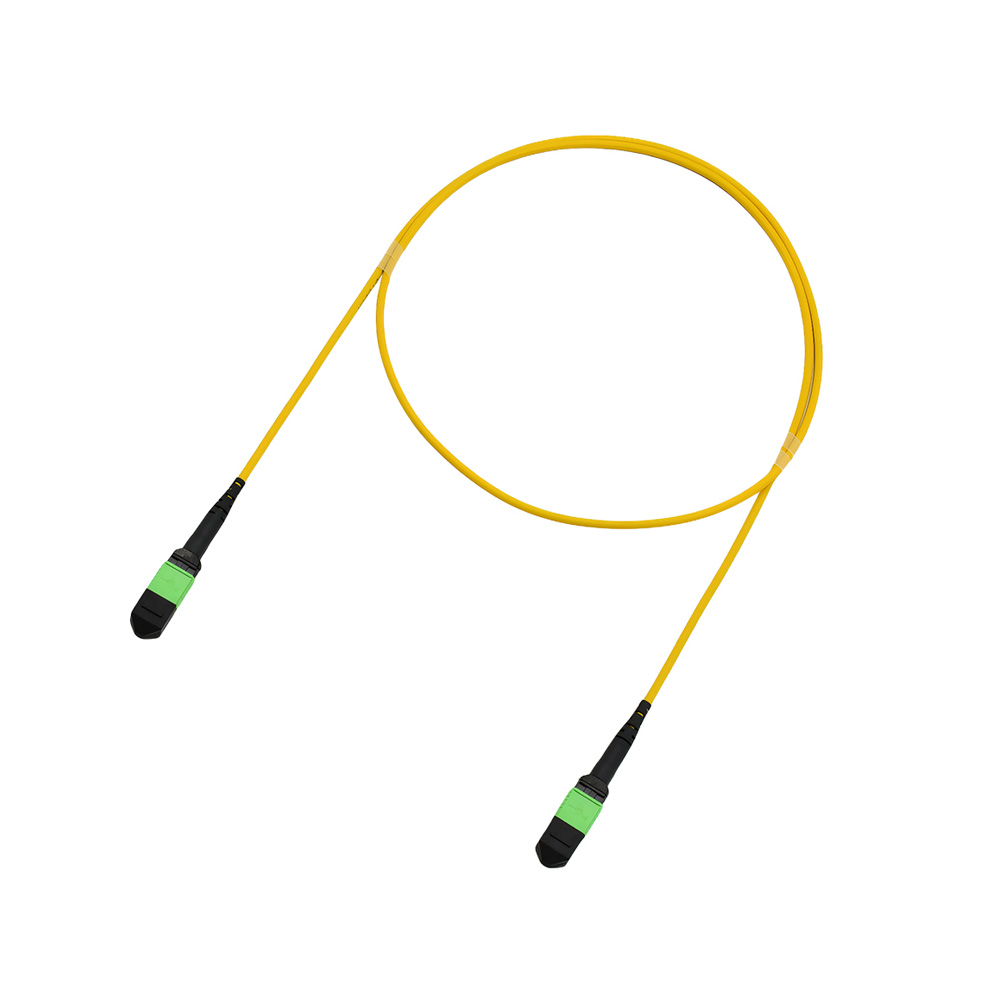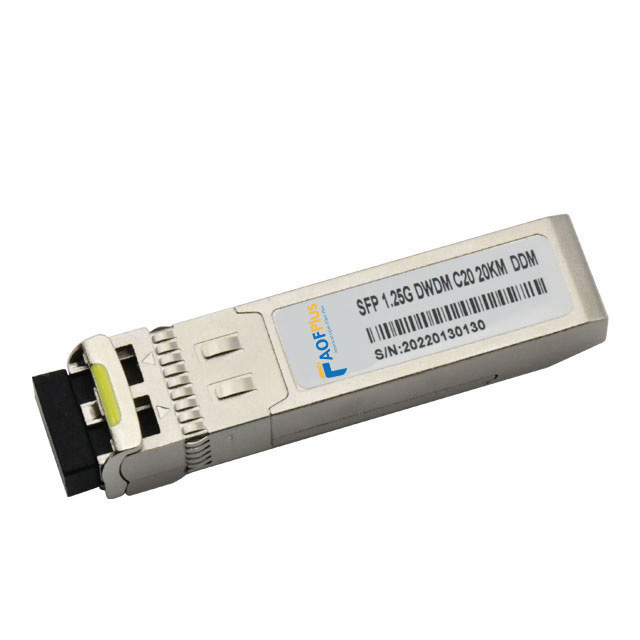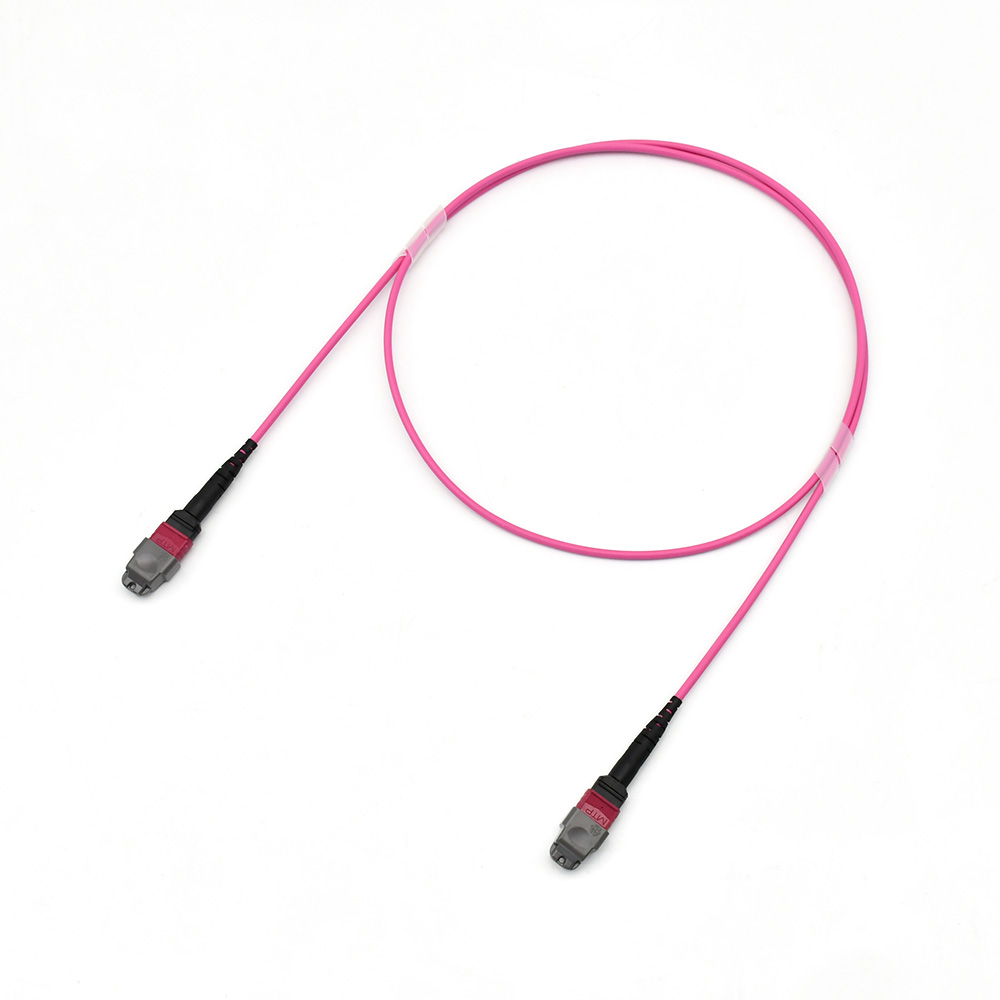
A 200G optical transceiver is a type of high-speed optical transceiver used in telecommunications and data center networks to transmit data at speeds of 200 gigabits per second (Gbps) over optical fiber cables. 200G fiber optic transceivers have two technical approaches: one uses the cost-effective 8x25G NRZ modulation with QSFP-DD packaging; the other uses 4x50G (up to 4x56G) PAM4 modulation with QSFP56 packaging.
The Introduction of 200G QSFP-DD Optical Transceivers
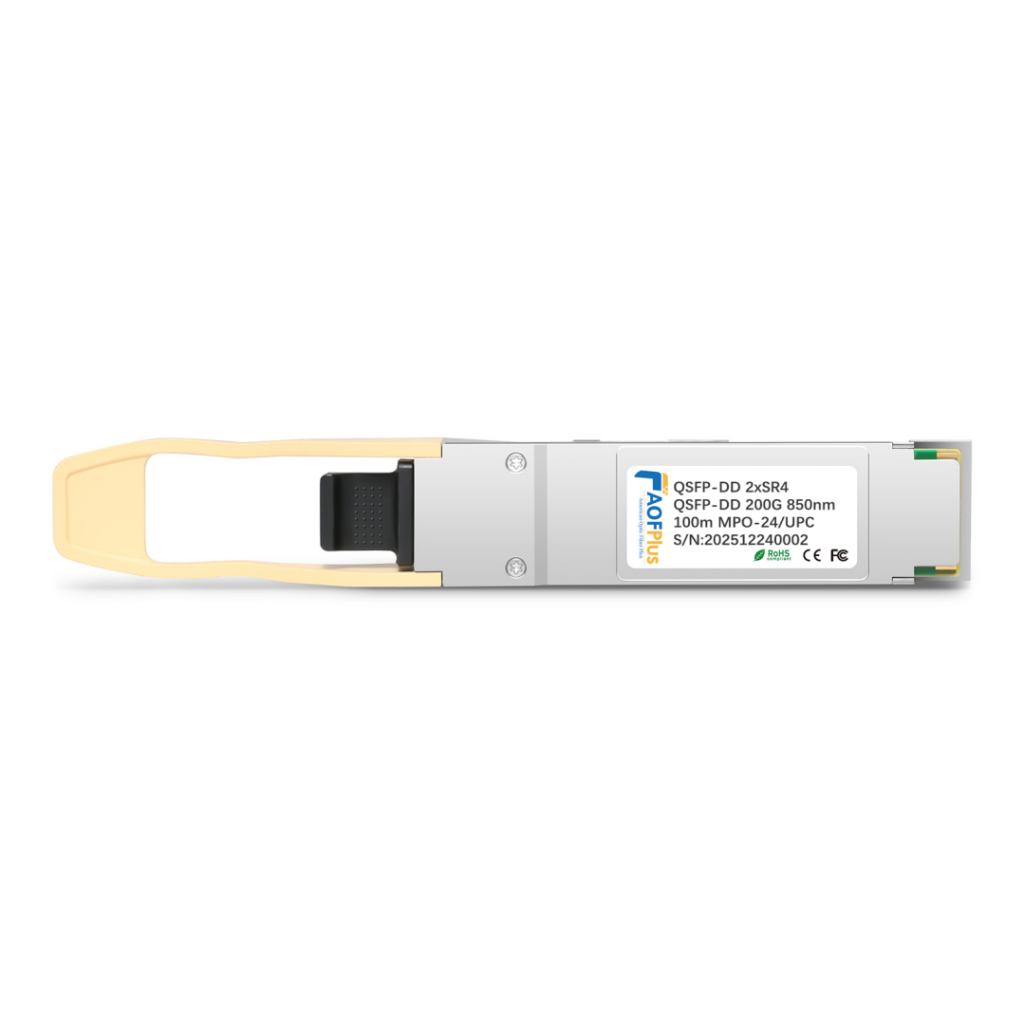
200G QSFP-DD (Quad Small Form-factor Pluggable Double Density) optical transceivers are high-speed transceiver modules used primarily in data centers and high-performance computing (HPC) for 200GbE applications. They utilize a “double density” design, featuring 8 lanes of high-speed electrical interfaces to achieve 200G throughput.
Key Types and Specifications:
SR8 (Short Range): It supports up to 100m over OM4 Multimode Fiber (MMF) using 8 lanes of 25G NRZ or PAM4.
2xSR4 (Breakout): It is designed for 2×100G breakout applications, allowing a 200G port to connect to two 100G QSFP28 ports.
LR4/LR8 (Long Range): It supports distances up to 10km or 20km over Single-mode Fiber (SMF) using LWDM (LAN WDM) technology.
ER4 (Extended Range): It is capable of transmissions up to 40km over SMF.
The Introduction of 200G QSFP56 Optical Transceivers
200G QSFP56 transceiver modules are high-speed, hot-pluggable transceivers designed for 200 Gigabit Ethernet (200GbE) and InfiniBand HDR applications. They utilize 4-channel 50G PAM4 (Pulse Amplitude Modulation) technology to achieve a total data rate of 212.5 Gbps, providing a dense and energy-efficient solution for data centers and artificial intelligence/high-performance computing (AI/HPC) environments.
Key Types and Specifications:
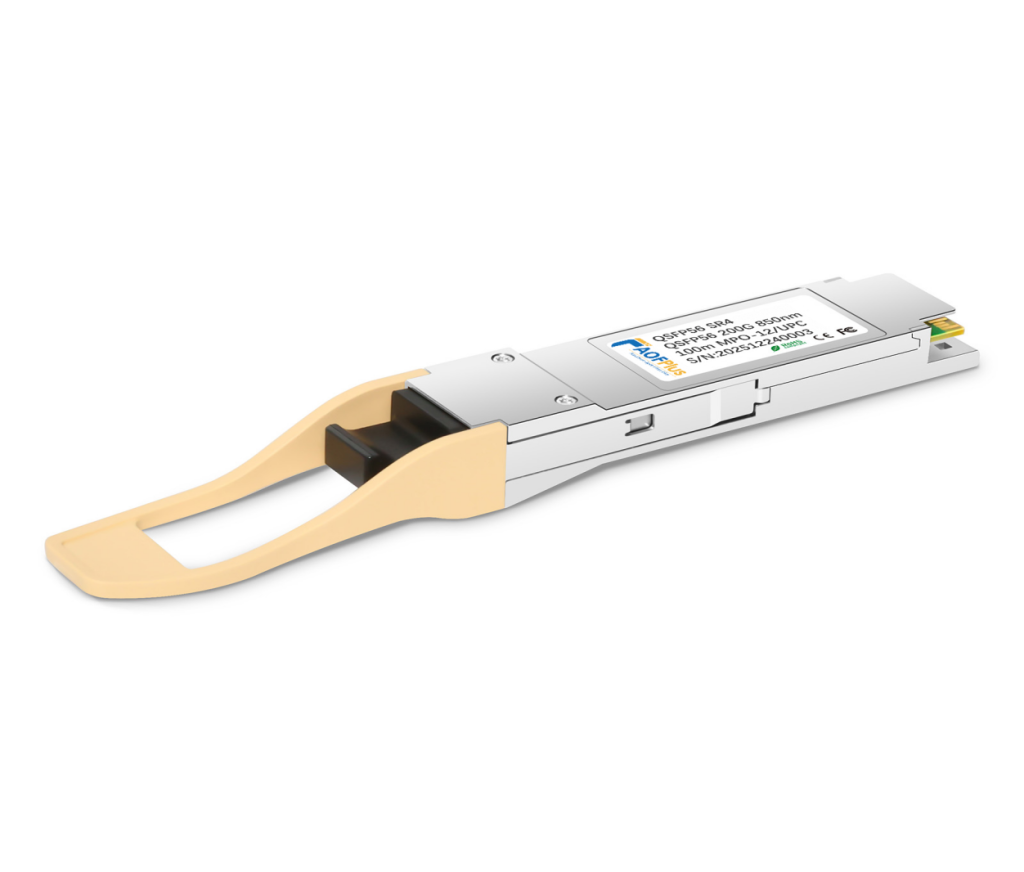
SR4 (Short Reach): It is designed for multimode fiber (MMF). Uses an MPO-12 connector and supports transmission distances up to 100 meters on OM4 fiber and 70 meters on OM3 fiber.
DR4 (Data Center Reach): It uses an MPO-12 connector and supports transmission distances up to 500 meters over parallel single-mode fiber (SMF).
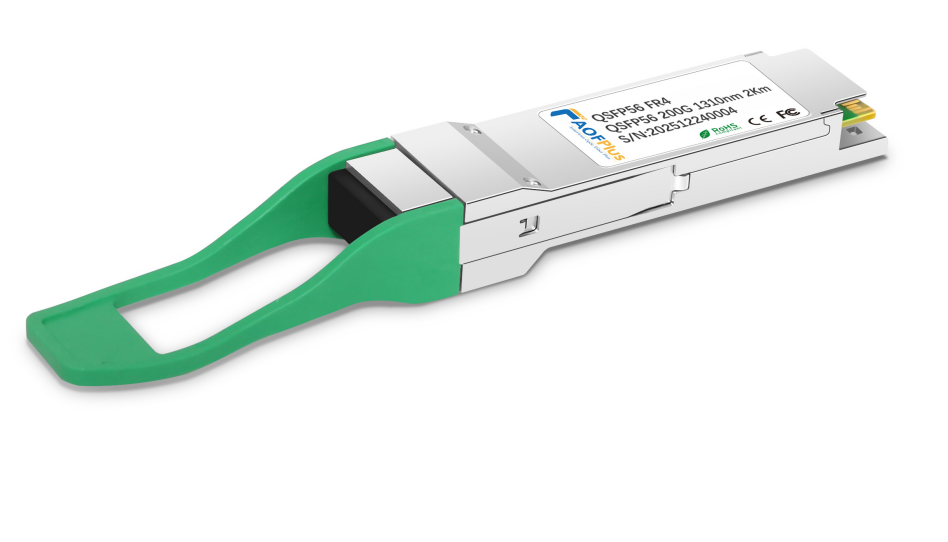
FR4 (Fiber Reach): It uses LC connectors and CWDM wavelengths, designed for 2 km transmission over duplex single-mode fiber.
LR4 (Long Reach): It enables long-distance connections up to 10 kilometers on single-mode fiber.
ER4 (Extended Reach): It uses APD receivers and LWDM wavelengths, supporting transmission up to 40 kilometers on single-mode fiber.
Advantages of 200G QSFP-DD Optical Transceivers
The 200G (8x25G NRZ) QSFP-DD fiber transceiver offers advantages such as low power consumption, low latency, and ease of deployment.
Low power consumption: The signal-to-noise ratio of NRZ is 9.54 dB higher than that of PAM4. Compared to NRZ transceivers, a transceiver implementing PAM4 requires more advanced equalization functions, making PAM4 modulation more complex and power-intensive. NRZ, on the other hand, consumes less power, which is beneficial for optimizing data center OPEX and cooling efficiency.
Low Latency: PAM4 is more sensitive to noise and more susceptible to noise interference, resulting in a higher bit error rate under the same transmission conditions. Therefore, it requires the addition of FEC (Forward Error Correction) mechanisms, which increases transmission delay. In contrast, NRZ can achieve a BER of 1E-15 with FEC disabled and offers lower latency. This makes it perform exceptionally well in certain special applications with stringent latency requirements, such as high-frequency trading network scenarios.
Easy deployment: For backward compatibility, when adopting PAM4, it is necessary to implement PAM4 at every level from the PHY to the physical layer while retaining existing NRZ circuits and logic. Since the 25G NRZ optoelectronic chip and optical device technology supply chain is mature, the development of related 200G port switches and 200G fiber optic transceiver products is relatively easy, enabling rapid commercial deployment.
Based on the advantages mentioned above, 200G QSFP-DD optical transceivers can achieve low-cost optical interconnection within data centers.
Advantages of 200G QSFP56 Optical Transceivers
The 200G QSFP56 transceiver is a high-performance fiber optic transmission transceiver widely used in data centers, cloud computing, long-haul transmission, and telecommunications. The 200G QSFP56 optical transceiver offers several significant advantages, mainly in the following aspects:
High Bandwidth and High Density: The 200 QSFP56 fiber optic transceiver provides up to 200Gbps of bandwidth through four 50G channels, enabling more connections in a smaller space (up to 36 ports/RU).
Low Power Consumption: The 200G QSFP56 transceiver module consumes less power compared to other technologies with the same transmission rate (such as 200G CFP8), which allows for reduced energy consumption in applications such as data centers, helping businesses achieve higher energy efficiency and lower operating costs.
PAM4 Modulation: The 200 QSFP56 fiber optic transceiver utilizes advanced Pulse Amplitude Modulation (PAM4) technology to achieve higher data rates over existing fiber optic cables, improving spectral efficiency.
Versatile and Future-Proof: The 200 QSFP56 fiber transceiver supports a variety of applications including cloud computing, artificial intelligence, big data, and high-performance computing, and offers breakout cable options (e.g., 4x50G) for flexible port density.
How to Choose 200G Optical Transceivers
With the rapid development of data centers, data transmission demands are constantly increasing, driving networks towards higher bandwidth and higher density.
Although the QSFP-DD package is currently the most popular package type in the 400G Ethernet market, this does not mean the obsolescence of the QSFP56 package type. For data centers that do not require the high speeds of 400G, deploying 200G Ethernet using 200G QSFP56 fiber transceiver remains an ideal solution. If considering upgrading to 400G, deploying 200G QSFP-DD optical transceiver is a more economical and efficient option.
Conclusion
200G fiber optic transceivers, as an efficient and flexible solution, have become a key choice for many network upgrades and optimizations. Whether it’s the high density and high performance offered by 200G QSFP-DD transceivers or the advantages of 200G QSFP56 optical transceiver in terms of energy efficiency and bandwidth utilization, these modules can meet diverse needs for bandwidth, power consumption, transmission distance, and latency in different scenarios. When choosing a suitable 200G transceiver module, users should make decisions based on specific network requirements, future expansion plans, and budget constraints. With continuous technological advancements, 200G fiber optic transceivers will continue to play a crucial role in driving the development of data centers, cloud computing, big data, and artificial intelligence.